




*****The following content was written by the author(s) of the paper.*****
Kanazawa University, Japan – Research group led by Prof. Keiichi Hirano and Assistant Prof. Akira Matsumoto have developed a novel synthetic method for the selective cleavage of strong carbon–hydrogen (C–H) bonds while preserving weaker carbon–silicon (C–Si) bonds. This transformation enables the upgrading of structurally simple α-silyl alcohols into functionalized derivatives that are difficult to access by conventional methods. The key to this success lies in utilizing a finely tuned phosphonium ylide catalyst in combination with an organophotoredox catalyst under visible-light irradiation.
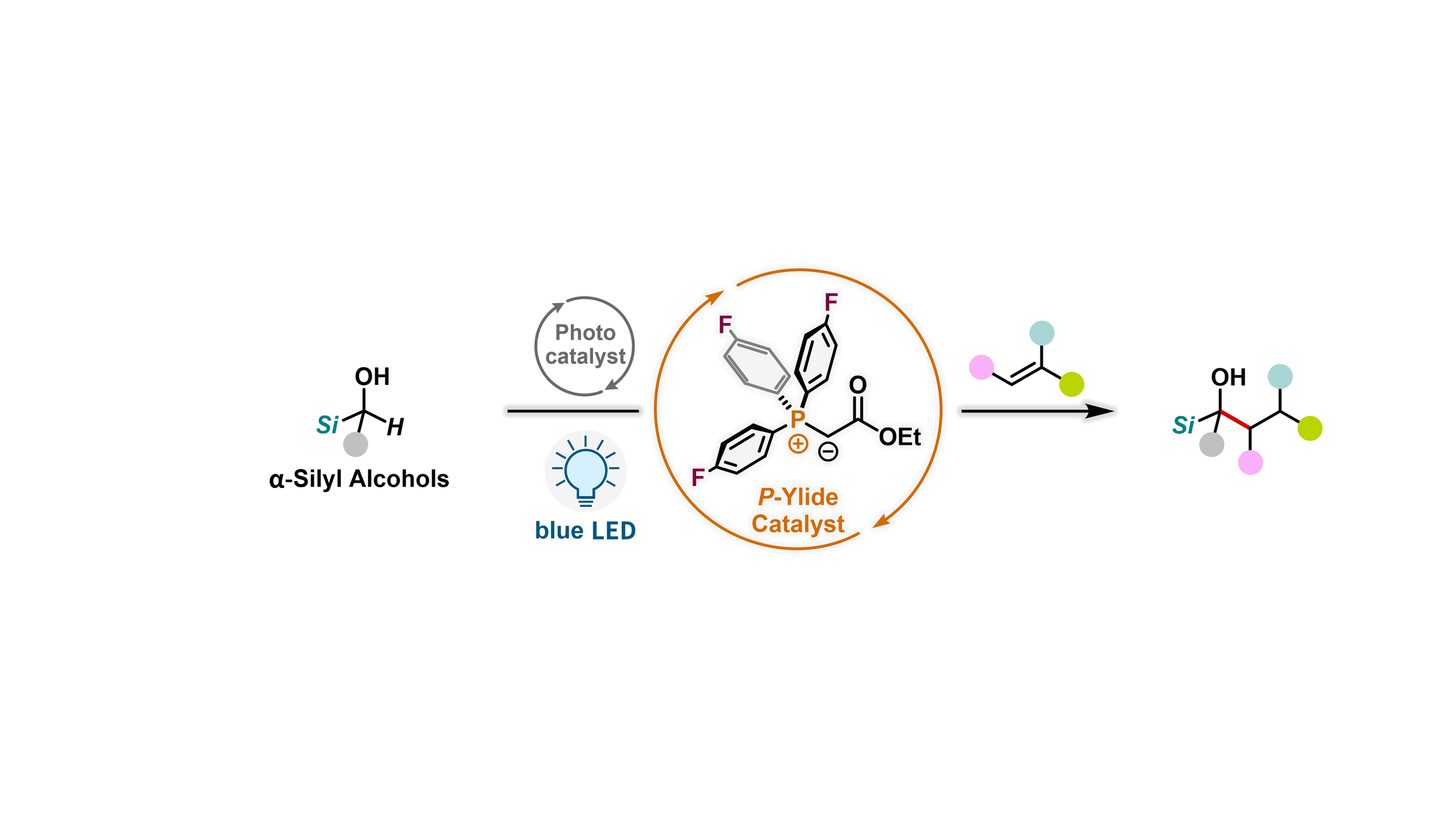
α-Silyl alcohols are unique organosilicon compounds bearing a silyl group and a hydroxy group at the same carbon atom. Since these compounds serve as precursors to reactive species, such as carbanions and carbon radicals, they represent pivotal building blocks for synthesizing pharmaceuticals and functional materials. However, their synthesis often requires multi-step procedures and suffers from poor functional group tolerance; thus, developing simpler and more versatile synthetic methodologies has become increasingly important. “Chemists have utilized these compounds mainly in the Brook rearrangement—the 1,2-silyl group migration from carbon to oxygen—to generate reactive chemical species that can form new chemical bonds. Despite such a unique reactivity and utility, little attention has been paid to the tedious procedures required for their preparation,” explains Dr. Matsumoto. To overcome these limitations, the researchers focused on hydrogen-atom transfer (HAT), a homolytic process where a hydrogen atom in a molecule is abstracted by an active radical species to generate a new radical intermediate. They envisioned a photocatalytic system that promotes the HAT process from α-silyl alcohols to furnish carbon-centered radicals, which subsequently react with alkenes to afford functionalized α-silyl alcohols. Catalyst screening revealed that phosphonium ylides effectively upgrade structurally simple α-silyl alcohols into more complex, functionalized derivatives. Notably, the optimal catalytic system exhibits unprecedented selectivity, cleaving inert C–H bond over typically labile C–Si bond.
“Because phosphonium ylides are highly tunable, we synthesized and screened various derivatives with distinct electronic and steric properties. Gratifyingly, one tailored derivative displayed higher catalytic activity and chemoselectivity than conventional HAT catalysts,” says Dr. Matsumoto. The reaction proceeds under mild conditions upon visible-light irradiation, exhibiting a broad substrate scope and high functional group tolerance. Unlike conventional methods that require harsh, strongly basic organometallic reagents, this protocol provides streamlined access to functionalized α-silyl alcohols that are otherwise difficult to synthesize. Furthermore, these products can be selectively transformed into complex organosilicon motifs or other aliphatic alcohols depending on the reaction conditions, highlighting their utility as versatile building blocks for organic synthesis.
The study was published in "ACS Catalysis" on July 2, 2026.
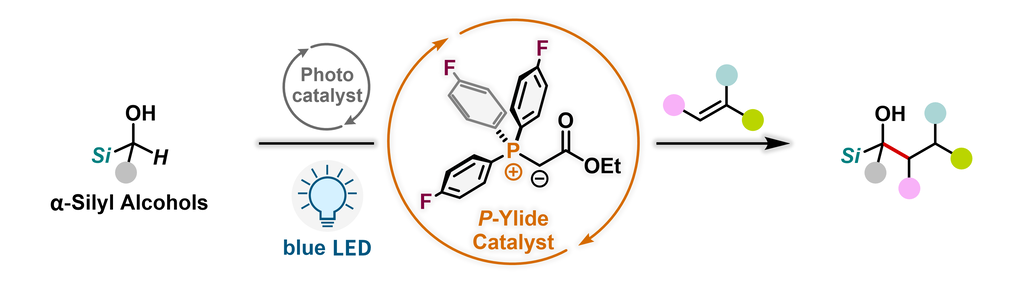
Research overview: α-C–H alkylation of α-silyl alcohols by phosphonium ylide hydrogen-atom transfer catalyst.
【Glossary】
Click here to see the press release.【Japanese only】
ジャーナル名:ACS Catalysis
Researcher Information : Keiichi Hirano
Akira Matsumoto
Chao Wang
Related Information
 PAGE TOP