
Photo of Yuka Sasaki
Research NEWS

Discovery of the Oldest Impressions of Perilla (Genus Perilla) Fruits on Jōmon Incipient Pottery

Institute for the Study of Ancient Civilizations and Cultural Resources, Associate Professor
佐々木 由香SASAKI, Yuka

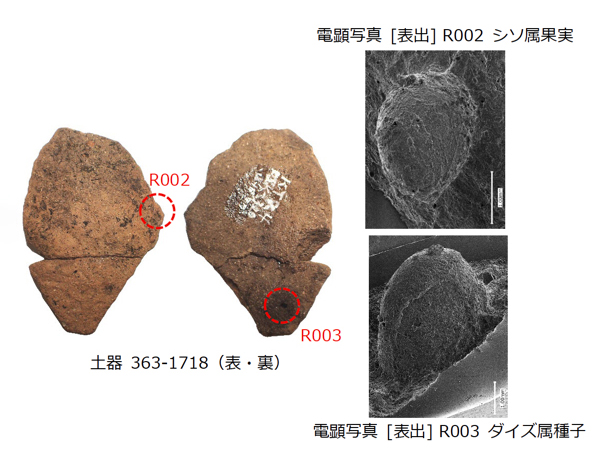
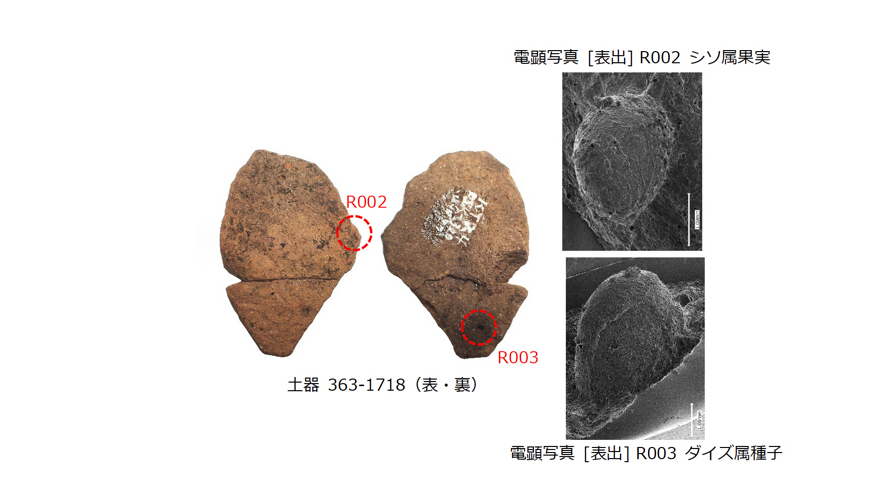
A collaborative research group consisting of associate professor Yuka Sasaki of the Institute for the Study of Ancient Civilizations and Cultural Resources, Kanazawa University, professor Kenichi Kobayashi of Chuo University, and visiting researcher Shihoko Nishimoto, has discovered the oldest impressions of fruits belonging to the genus Perilla ever found in the Japanese archipelago. These impressions were identified on pottery from the Incipient Jōmon period excavated at the Ōshikakubo Site in Fujinomiya City, Shizuoka Prefecture.

The Ōshikakubo Site is one of the oldest settlement sites of the Incipient Jōmon period in Japan and is designated as a National Historic Site. Using the replica method, the research group examined depressions found on the surface of pottery dated to approximately 12,600–12,900 years ago. Their analysis revealed that the impressions were from Perilla fruits and seeds of the genus Glycine (soybean). Notably, the Perilla fruit impressions are 2,000–3,000 years older than any previously known Perilla impressions on pottery, making them the oldest such evidence in the Japanese archipelago.

This discovery demonstrates that useful plants such as Perilla fruits and Glycine seeds were present at pottery-making sites during the Incipient Jōmon period—an important transitional phase from nomadic Paleolithic lifestyles to the more settled Jōmon way of life. The findings provide a strong evidence that these plants may have been utilized by Jōmon people from the earliest stages of the Jōmon period.

The results of this study were presented as a poster at the 92nd Annual Meeting of the Japanese Archaeological Association, held on May 24, 2026.


Click here to see the press release.【Japanese only】

Researcher Information : Yuka Sasaki

Related Information

Institute for the Study of Ancient Civilizations and Cultural Resources, Kanazawa University


FacebookPAGE TOP