



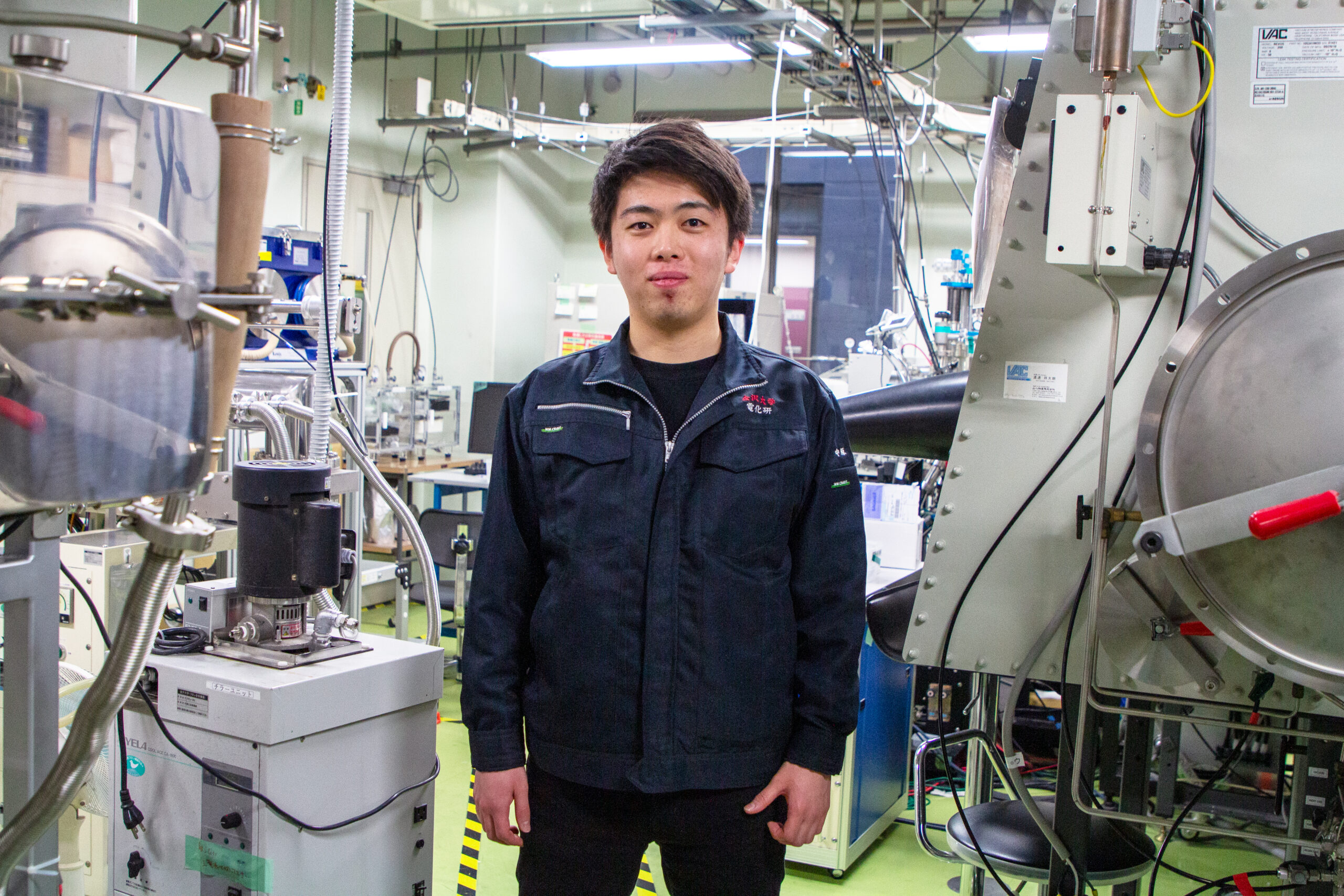
As a HaKaSe +selected student, Yugo Nakahara, a first-year doctoral student in the Division of Material Chemistry, Graduate School of Natural Science and Technology (at the time of the interview), is advancing research on perovskite solar cells. He shares what motivated him to continue to do doctoral studies, what makes his research exciting, and how he envisions his future career. Watch the interview video on Kanazawa University's official research Instagram account.
What inspired you to pursue a doctoral program?
To be honest, it wasn’t simply because I loved research. As an undergraduate, I wasn’t an outstanding student academically, and I felt I wasn’t yet ready to build a career as a researcher or science professional. That realization became my biggest motivation to keep learning.
With the future changing so rapidly, I wanted to develop the ability to adapt to whatever challenges might come my way. Pursuing a doctoral degree offered the opportunity not only to deepen my expertise, but also to broaden my perspective beyond my own field and strengthen my communication skills. That combination convinced me that a doctoral program was the right path for me.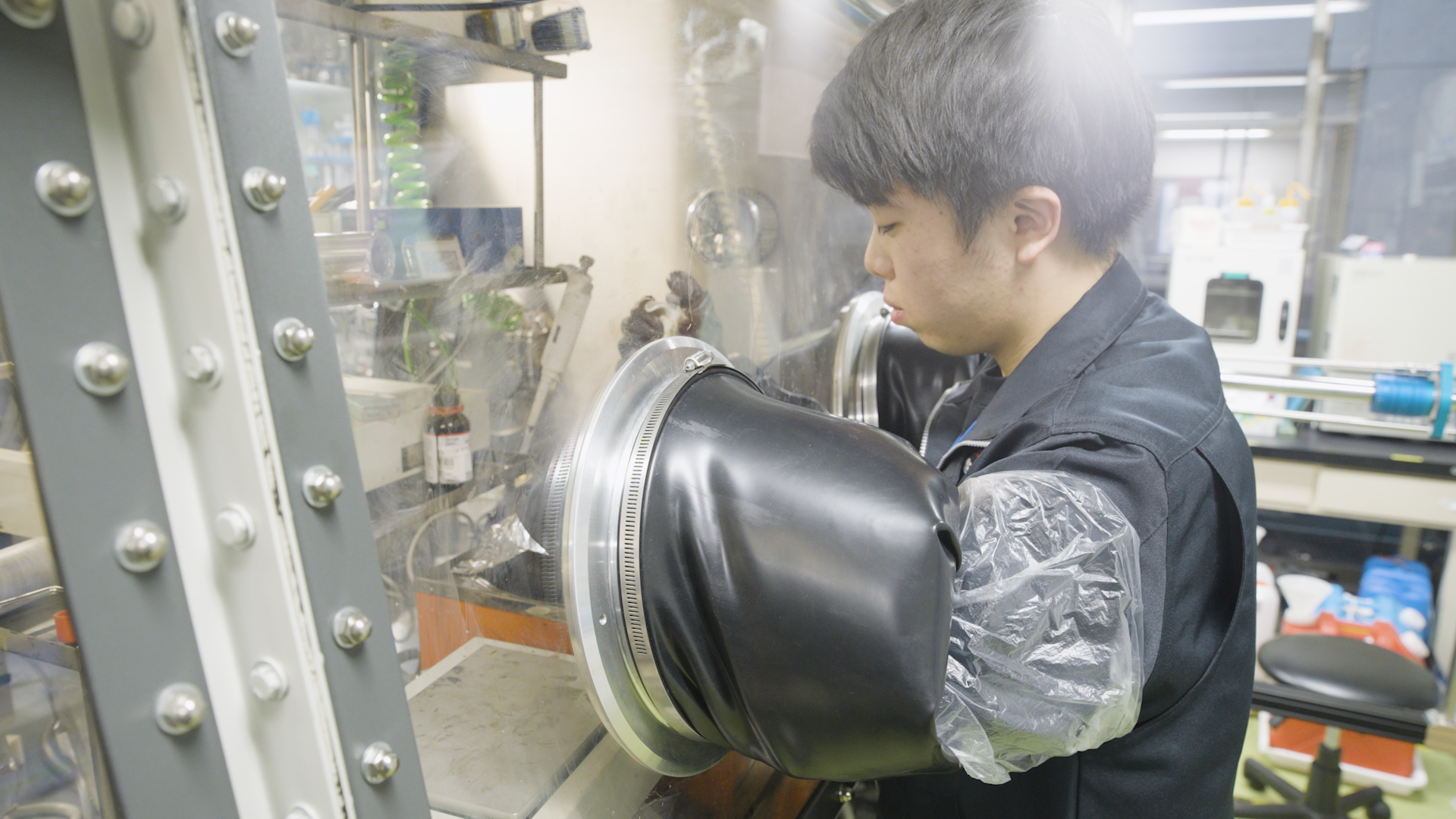
What kind of research are you currently conducting?
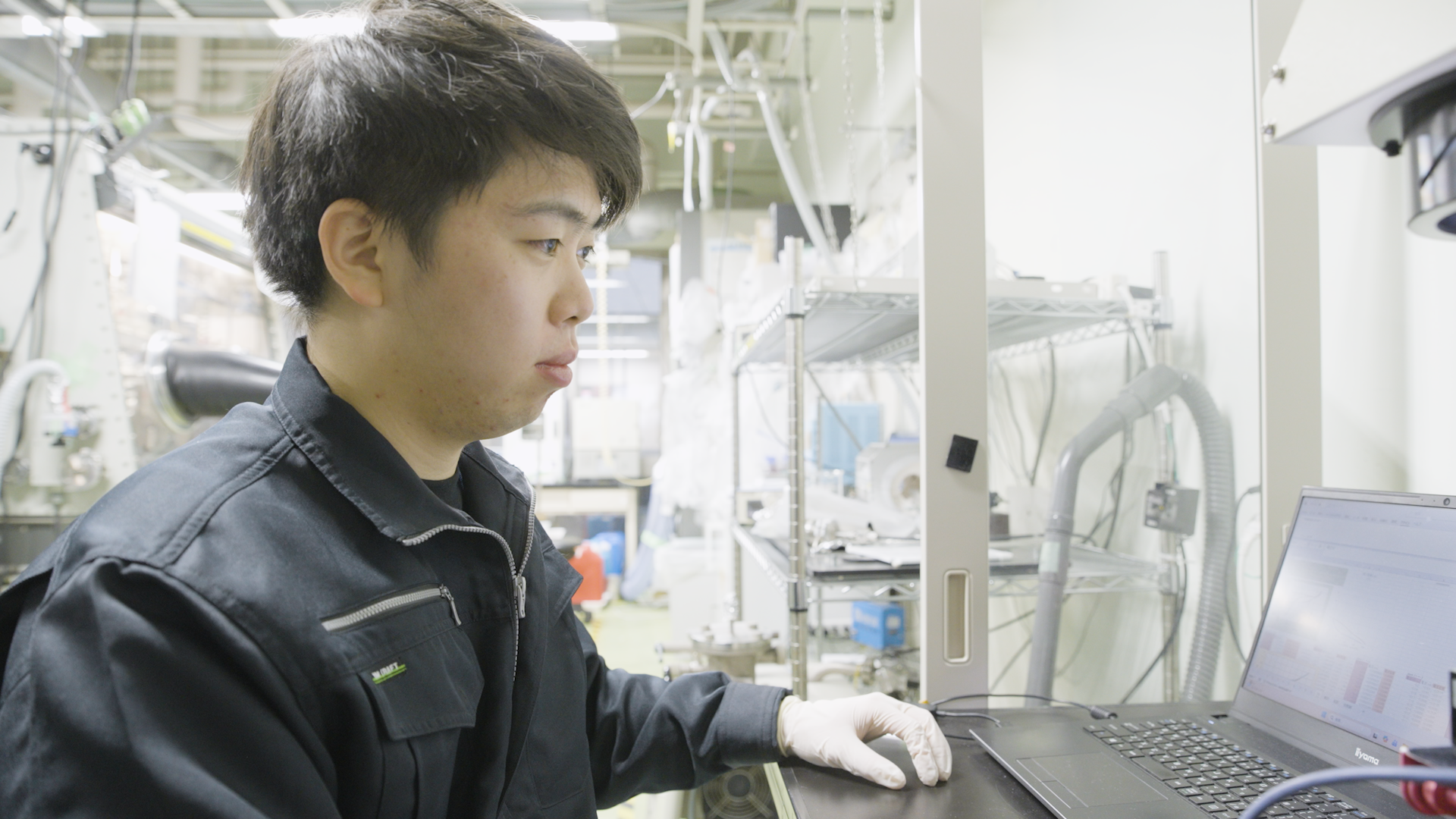
I am conducting research on perovskite solar cells, a next-generation photovoltaic technology. One of their greatest advantages is their flexibility and lightweight nature. Because they can be bent or folded like a film, they can be installed in places where conventional silicon solar panels are difficult to use, such as on building windows and rooftops or even on vehicles. However, perovskite solar cells have not yet been widely commercialized, largely because of their limited durability. While conventional silicon solar panels can last for around 30 years, perovskite solar cells are highly susceptible to degradation caused by moisture in the atmosphere and currently have a lifespan of only about one year.
In our laboratory, we are developing technologies to improve their stability under real-world conditions by using ionic liquid additives. Our goal is to enhance their resistance to moisture, heat, and light, which are critical factors affecting long-term performance. At the laboratory scale, perovskite films are typically fabricated using a process called spin coating, which uses centrifugal force generated by high-speed rotation to form thin films. While this method is suitable for research and small-scale production, it is not practical for mass manufacturing. In industrial settings, a roll-to-roll process is generally preferred, in which films are continuously coated, dried, and wound onto rolls. Because spin coating is difficult to apply in roll-to-roll production, I have introduced a bar-coating method, in which a solution-coated bar is moved across the substrate at a controlled speed to form the film. This approach offers excellent scalability and has the potential to reduce manufacturing costs compared with conventional spin-coating techniques.
Energy issues are long-term challenges that will remain with us throughout our lives—from our student years to our professional careers and beyond. I chose this laboratory because I want to contribute to addressing those challenges and become someone who can help develop practical solutions for a more sustainable future.
What moments in your research do you find most enjoyable?
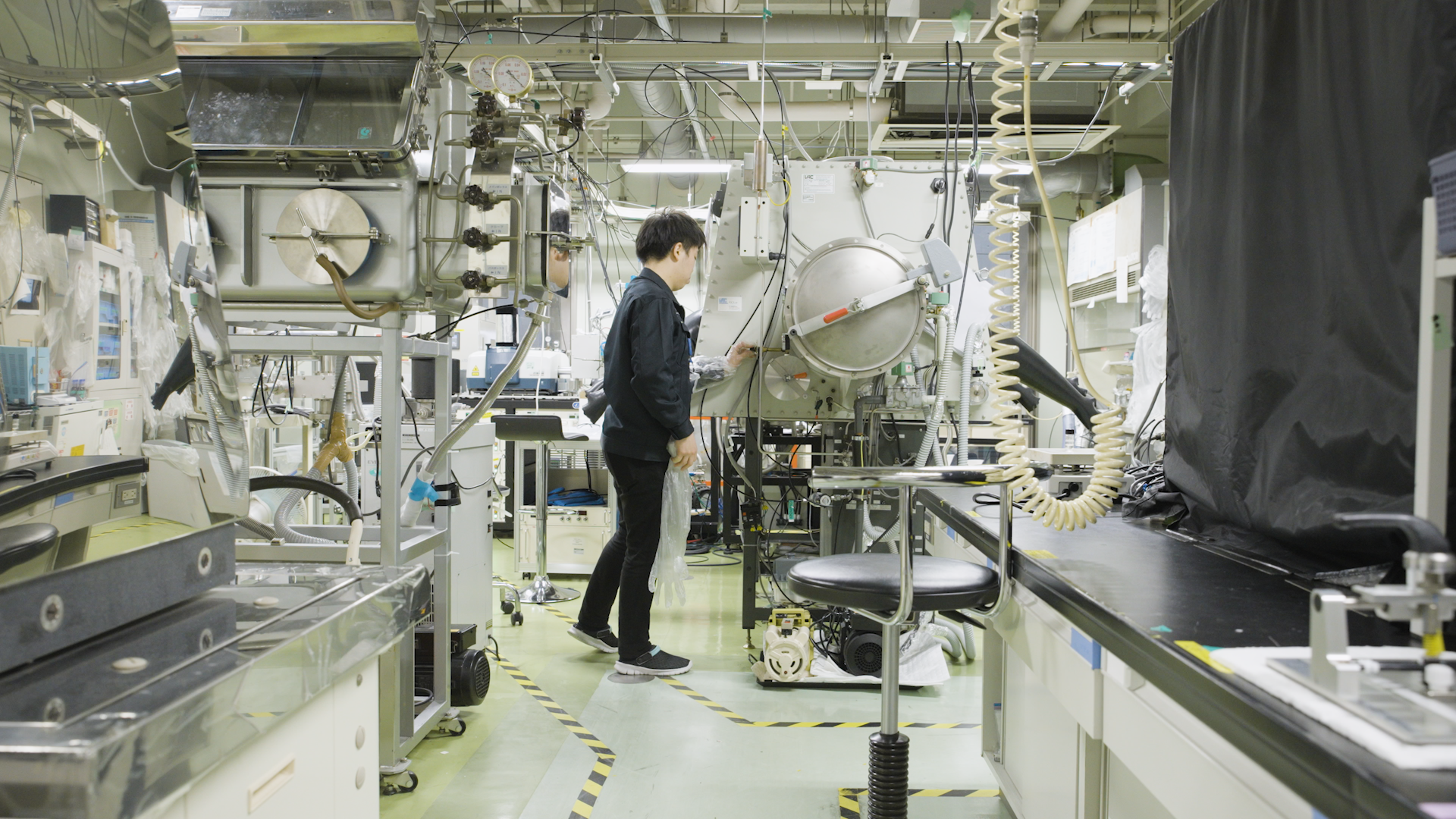
In solar cell research, one of the most important performance indicators is power conversion efficiency, which measures how effectively a solar cell converts sunlight into electricity. Whenever I achieve better results than before, it is incredibly rewarding. At the same time, our laboratory places just as much emphasis on durability as on efficiency. We are not only interested in how well a device performs initially, but also in how long it can maintain that performance. That is why I always feel a sense of tension when I measure the power conversion efficiency of devices that have been aging over time. When the results show that the performance has been maintained, it is a huge relief and a very satisfying moment.
Another particularly memorable achievement was publishing a paper that demonstrated, for the first time, that ionic liquid additives can enable the fabrication of highly durable, long-lasting perovskite solar cells under ambient atmospheric conditions. Traditionally, these devices have been fabricated in nitrogen-filled glove boxes to protect them from moisture and oxygen during the manufacturing process.
Which forms of support or programs offered through HaKaSe⁺ have been the most valuable to you??
The most valuable support for me was the funding provided for international travel. In July 2025, I had the opportunity to undertake a research stay in Metz, France. Thanks to the financial support for travel and living expenses, I was able to focus fully on my research without having to worry about the costs associated with studying abroad. One of the biggest challenges I faced, however, was communication. There were many situations where even English was not widely spoken, so I often found myself looking up French phrases and doing my best to communicate on the spot. It was certainly difficult at times, but it became an invaluable learning experience. Being immersed in an unfamiliar environment taught me how to adapt quickly and respond to unexpected situations. Looking back, the experience not only broadened my perspective as a researcher but also contributed greatly to my personal growth.
How do you unwind outside of your research?
I enjoy going on solo road trips. I often set out for places I have never visited before, whether it is the northernmost or easternmost points of Hokkaido, the westernmost or southernmost parts of Kyushu, or even a trip all the way around Shikoku. For me, the destination itself is not the main attraction. Rather, the goal is simply getting there. Being able to focus solely on driving and the road ahead is one of the best ways for me to relax and clear my mind. In a way, I think driving and research have something in common. The value of a journey does not necessarily lie in the final outcome alone. Along the way, there are unexpected discoveries, interesting experiences, and opportunities for growth, but you can only gain them if you actively seek them out yourself. Research feels much the same to me, which is perhaps why I find driving so refreshing.
Could you tell us about your future aspirations?
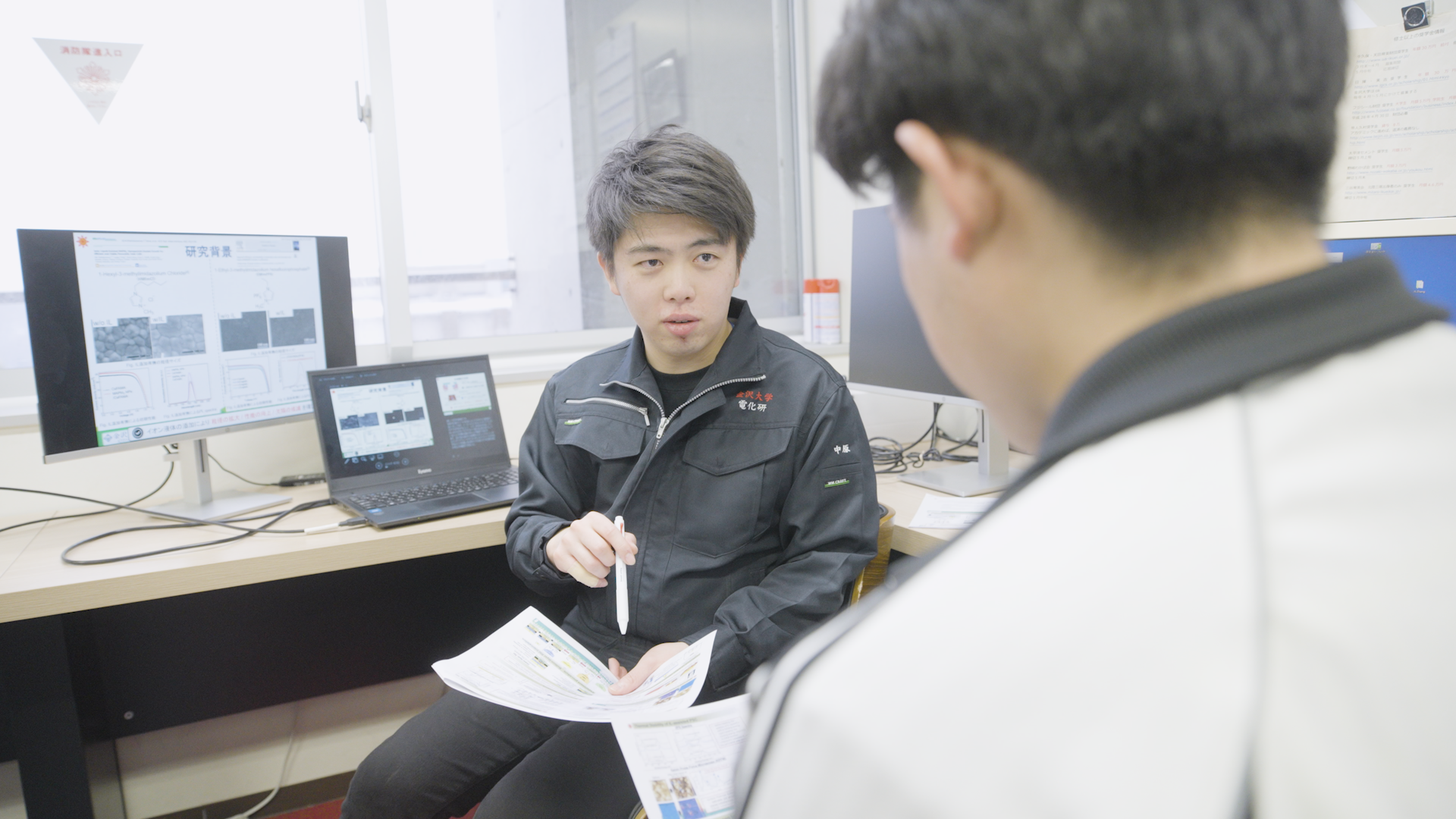
One of the strengths of my laboratory is its strong emphasis on translating fundamental research into real-world applications. We actively collaborate with companies and other universities, which allows us to look beyond laboratory-scale experiments and explore how new technologies can be implemented in industrial settings. At the same time, I have come to realize that there is often a significant gap between technologies that work in the laboratory and those that can be deployed on an industrial scale. Many factors differ, including the equipment used, the materials and solutions required, and, of course, cost. As a result, even when a technology proves successful in the laboratory, it cannot necessarily be commercialized or implemented in practice right away. I believe this is a challenge faced not only in Japan but across academia. That is why my goal is to become a scientist who can bridge the gap between fundamental research and practical application, helping innovative technologies make the transition from the laboratory to society.
Finally, could you share a message for those considering pursuing a doctoral program?
I do not believe that you need to be an exceptional student to pursue a doctoral degree. In fact, I would not describe myself as having been an outstanding student.
During undergraduate studies, much of your time is spent in the classroom, and academic performance often improves through studying and coursework. Once you join a research laboratory, however, a different set of skills becomes important. Research requires you to design experiments, work with your own hands, learn from trial and error, and steadily build results through practice and persistence. Even if classroom learning is not your greatest strength, that does not mean you are unsuited for doctoral study. I hope students will not dismiss the idea of pursuing a Ph.D. simply because they are not at the top of their class. There are many ways to succeed as a researcher, and you may discover strengths that only emerge through hands-on research experience.
*Note: Affiliations, academic years, and other details are current as of the time of the interview and may have changed since then.
(Tamayo Kido, writer)
Related Information
Graduate School of Natural Science and Technology, Kanazawa University
Taima-Sohel Laboratory, Nanomaterials Research Institute, Kanazawa University
 PAGE TOP