
Professor Kenjiro Ono and Associate Professor Moeko Shinohara of the Faculty of Medicine, Institute of Medical, Pharmaceutical and Health Sciences, Kanazawa University, together with Professor Toshiharu Ninomiya and Research Fellow Masaya Kumamoto of Kyushu University; Deputy Director Yukihide Momozawa of the RIKEN Center for Integrative Medical Sciences; and researchers from Hirosaki University, Iwate Medical University, Keio University, Matsue Medical Center, Ehime University, Kumamoto University, and the Institute of Development, Aging and Cancer, Tohoku University, jointly analyzed data from 9,605 community‑dwelling adults aged 65 years and older participating in the Japan Prospective Studies Collaboration for Aging and Dementia (JPSC‑AD). The analysis examined associations between APOE ε4 genotype, modifiable risk factors, dementia, and brain imaging findings.
The results showed that among non‑carriers and heterozygous carriers of APOE ε4, individuals with fewer accumulated modifiable risk factors had a lower prevalence of dementia. In contrast, among homozygous carriers, no clear differences in dementia risk were observed according to the degree of accumulated modifiable risk factors.
These findings suggest that even individuals with certain genetic risks —such as heterozygous carriers of APOE— may reduce their risk of dementia through appropriate management of modifiable risk factors, including lifestyle‑related diseases.
The study results were published on May 22, 2026, in the international journal "Alzheimer’s & Dementia: Diagnosis, Assessment & Disease Monitoring" .

【Reference Figure】
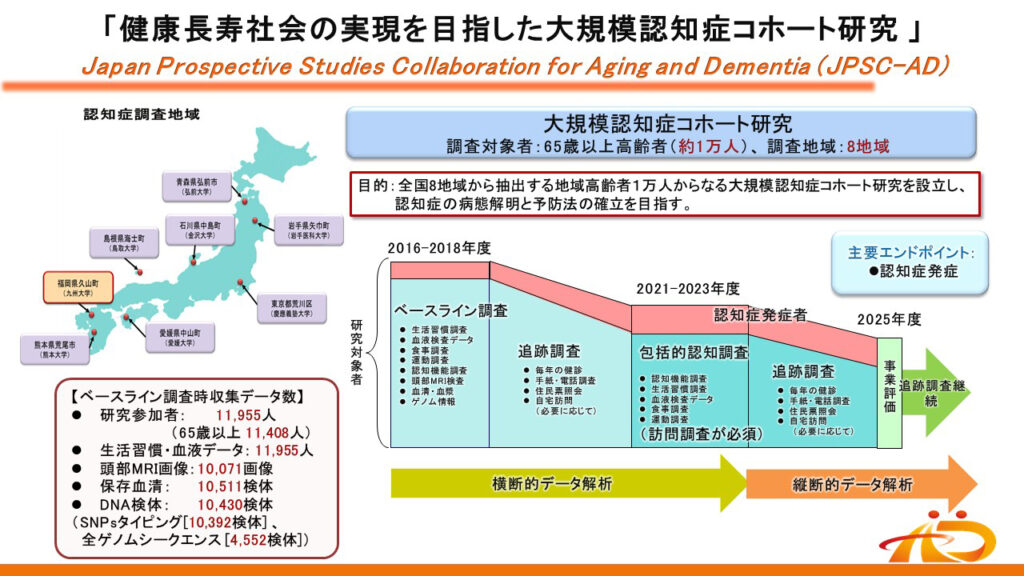
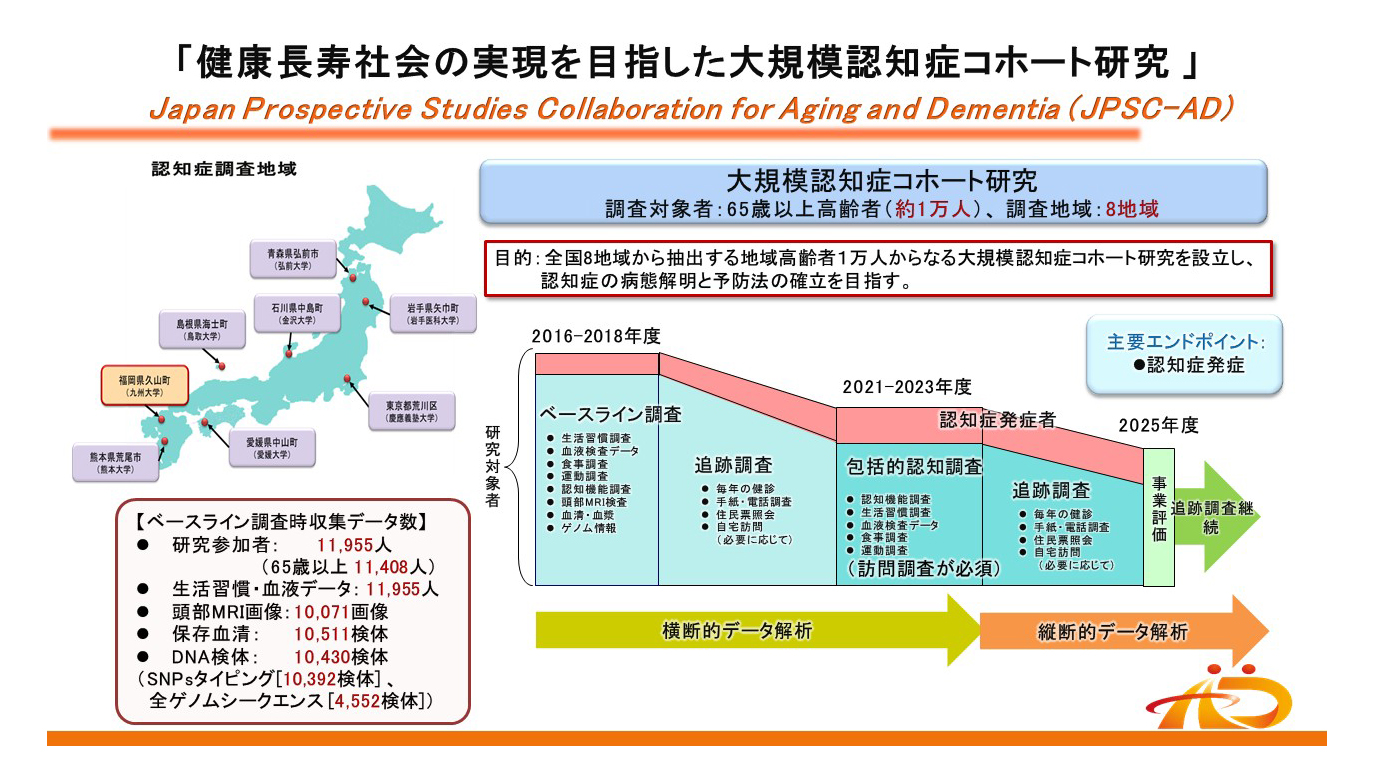
*1 Japan Prospective Studies Collaboration for Aging and Dementia (JPSC‑AD)
A large‑scale dementia cohort study involving approximately 10,000 older residents across eight regions of Japan (Hirosaki City, Aomori; Yahaba Town, Iwate; Nakajima Town, Nanao City, Ishikawa; Arakawa Ward, Tokyo; Ama Town, Shimane; Nakayama Town, Iyo City, Ehime; Hisayama Town, Fukuoka; Arao City, Kumamoto).
Baseline surveys (2016–2018) collected standardized clinical data (including cognitive function), brain MRI images, and genetic information. Follow‑up surveys continue to track dementia onset, cardiovascular disease, and mortality.
The study is supported by AMED (Japan Agency for Medical Research and Development) and includes collaborative research with Suntory Holdings Ltd.
*2 APOE ε4 Genotype
The
APOE gene, involved in lipid metabolism, has several allelic types including ε2, ε3, and ε4. APOE ε4 is known as a major genetic risk factor for Alzheimer’s disease.
*3 Heterozygous Carrier / Homozygous Carrier
Humans typically possess two copies of each gene, one inherited from each parent. Individuals with one copy of a particular allele are heterozygous carriers; those with two copies are homozygous carriers.
Click here to see the press release【Japanese only】
Journal : Alzheimer’s & Dementia: Diagnosis, Assessment, and Disease Monitoring
Researcher Information: Kenjiro Ono
Moeko Shinohara
Related Information