




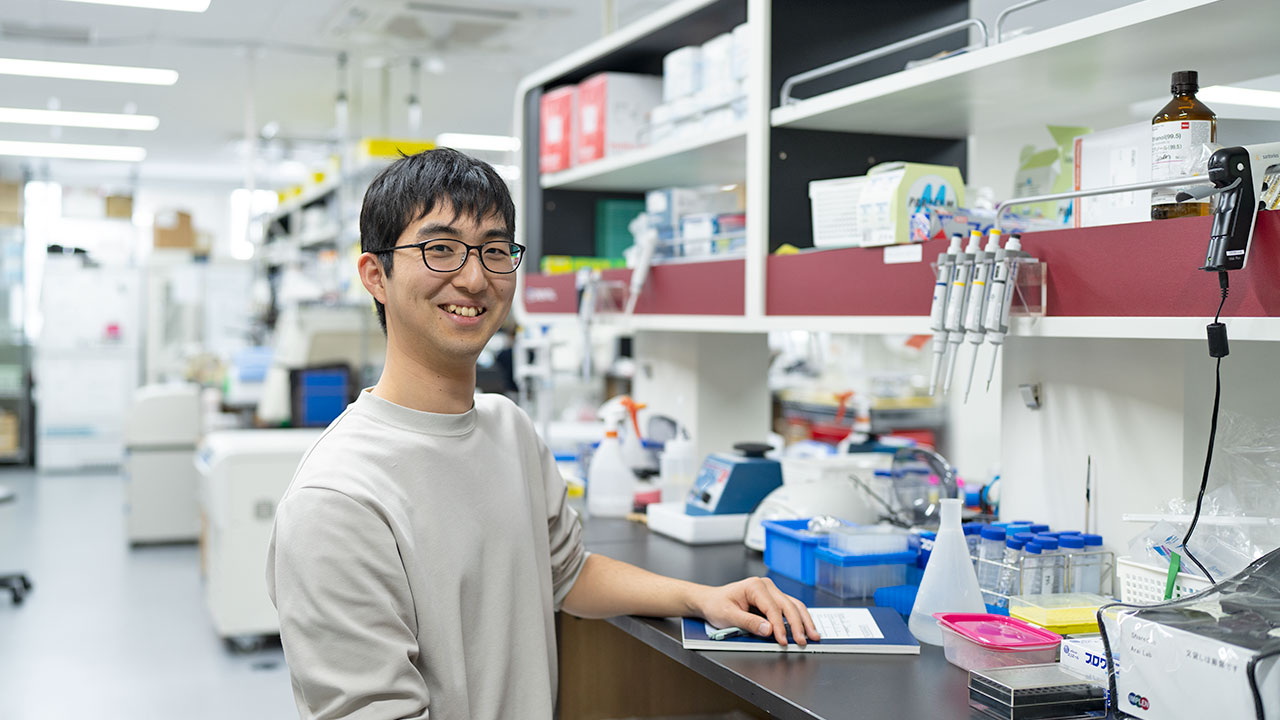
We interviewed Aki Teranishi, a first year doctoral student (at the time of the interview) in Division of Nano Life Science, Graduate School of Frontier Science Initiative. As a HaKaSe +selected student, he works on developmental biology. We asked him about what motivated him to enter the doctoral program and what he finds interesting about his research. You can watch the interview video on the official research Instagram account .
What motivated you to pursue a doctoral course?
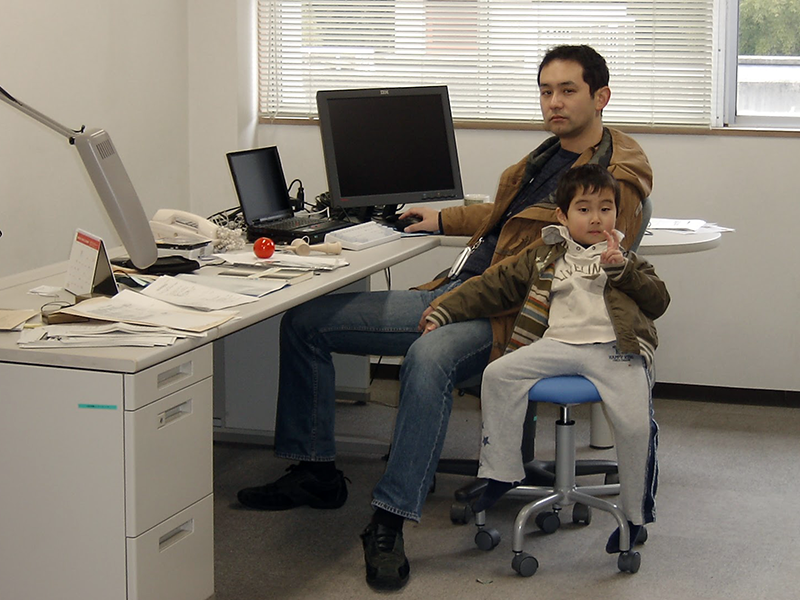
I've always wanted to be a researcher, and I've wanted to pursue a doctoral degree ever since I entered university. My father had a huge influence on me. He was also a researcher, and I grew up watching him write papers at home. I wasn't particularly aware of it at the time, but I remember being impressed by how enthusiastically he talked about his research. Looking back now, I think I was inspired by that.
I heard that my father, after working for a company, was determined to pursue a career in research and went on to a doctoral program with great difficulty. That was one of the reasons why he readily accepted my application for higher education, and the financial support from HaKaSe⁺ was also a big factor.
Is there a reason why you chose the biological field?
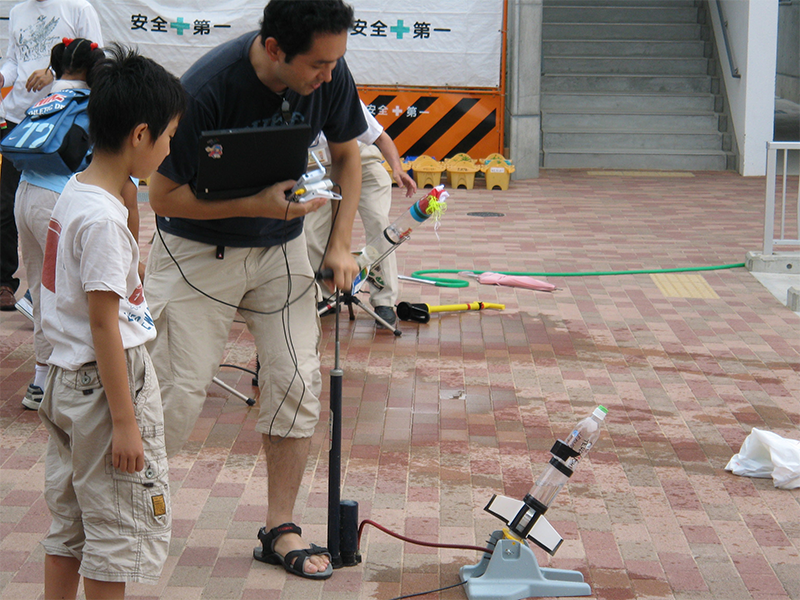
My father's and grandfather's roots are in Ishikawa Prefecture, and I often came here as a child. I spent a lot of time in nature, which is different from Osaka, where I am from, and had many opportunities to come into contact with living things. Through these experiences, I developed a desire to learn more about the wonders of living things, which led me to pursue research in biology. I also have a curious nature, and I feel that my originality is linked to the many challenges I have taken on, such as making things and conducting experiments in the science club.
What kind of research are you currently conducting?
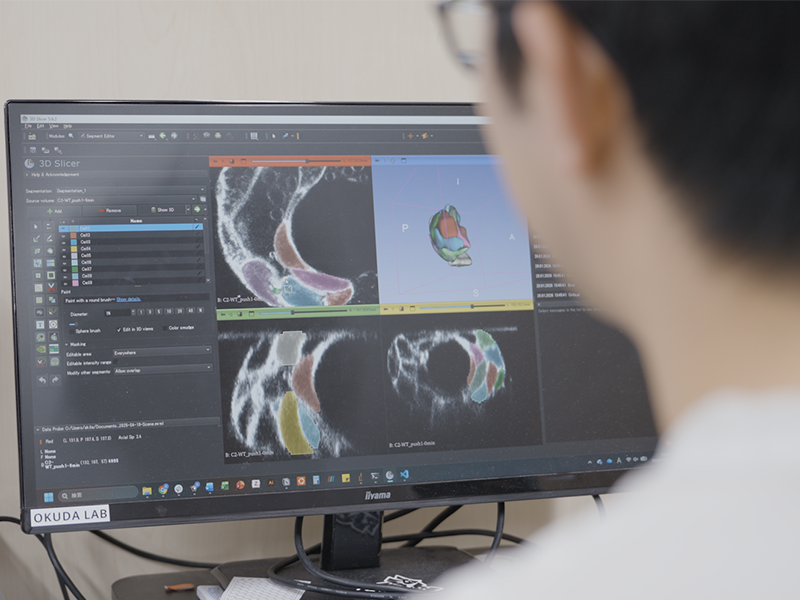
My research in developmental biology aims to clarify the process of how the complex forms of living things are formed. I am fascinated by the fact that in addition to biology, I integrate findings from various fields, such as physics and engineering, to approach fundamental questions about living organisms.
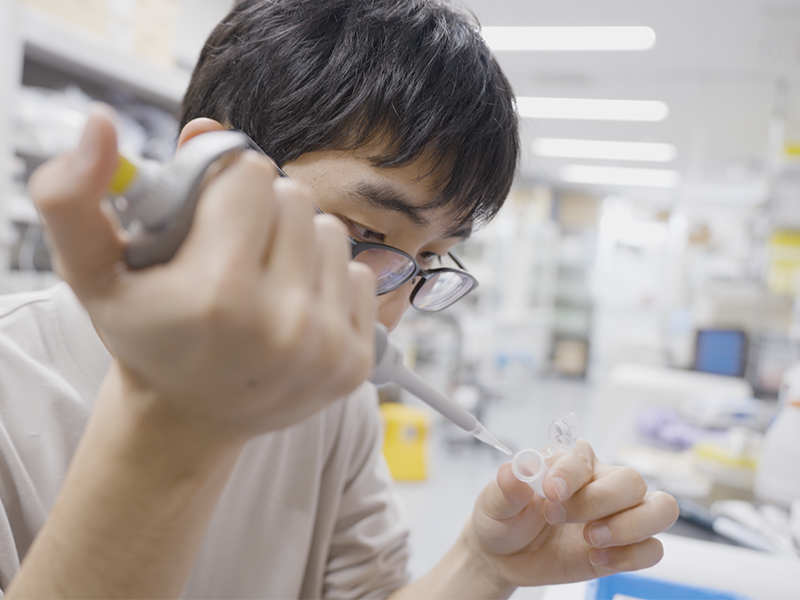
Specifically, I am focusing on the folding of epithelial tissue, which is important for shaping the surface of tissues and organs. To put it simply, our bodies are like origami, where complex structures are created by the repeated folding of epithelial tissues, and it is very important that "once a sheet is folded, it cannot be undone". We are studying how this irreversible fold occurs in epithelial tissues by combining material mechanics and cell biological analysis. I like best when I am observing under the microscope, and the joy I feel when I get a beautiful image, or the thrill I get when I find data that no one has yet seen is exceptional.
What support or programs have you found helpful at HaKaSe⁺?
The most important thing was the support for travel expenses, which allowed me to attend international conferences in Singapore and Taiwan. It was a big plus for me to be able to discuss directly with researchers who are active on the front lines. When I was a child, I used to enjoy watching my father talking with other researchers.
In addition, at the annual "Doors to Other Fields" event, students mix with students from other fields at HaKaSe⁺ to do group work and have the opportunity to think about how their research can contribute to social issues and what they can do in collaboration with other research, which is a great learning experience.
How do you unwind outside of your research?
I started riding a bicycle because I thought I needed to exercise, and I was totally hooked, and now I even commute to the university by bicycle. When I get stuck in my research or need a change of pace, I sometimes ride a little farther. I once found myself riding 70 km round trip to the base of the Noto Peninsula or to the Kaga area, and it was hard to get home.
Finally, could you tell us about your future aspirations?
In the future, I would like to continue my research in the world of academia. I would like to approach the great potential of living things and discover phenomena that will surprise people around the world. My goal is to become a researcher who can convey the fascination of living things to many people while ultimately returning the findings to society.
*Note: All affiliations, academic years, and other information are accurate as of the time of the interview.
(Tamayo Kido, writer)
 PAGE TOP