




A collaborative research team led by Associate Professor Yasuo Murayama of the Faculty of Humanities, Institute of Human and Social Sciences, and the Research Center for Child Mental Development at Kanazawa University has developed a new assessment tool—the Kanazawa University Loneliness Scale for Children and Adolescents (KULoS)—to quickly identify children’s often hard-to-detect loneliness. The study also confirms the scale’s effectiveness. KULoS is designed for students from first grade in elementary school through third grade in junior high school. One of its key strengths is its simplicity: the scale can assess a child’s level of loneliness using a four-item direct subscale (KULoS), allowing for rapid screening. The scale has demonstrated strong reliability and validity, and its ease of use makes it highly suitable for practical application in schools and community-based support settings.
This study is based on cross-sectional and longitudinal survey data collected in elementary and junior high schools across Ishikawa Prefecture as part of child support efforts following the Noto Peninsula earthquake in January 2024. The surveys were conducted in two waves, with 856 students participating in October 2024 and 709 in February 2025. The analysis revealed that loneliness measured by KULoS is strongly associated with children’s depressive symptoms. Furthermore, higher levels of loneliness at one point in time were found to predict higher levels of depressive symptoms approximately four months later.
In the aftermath of a disaster, children may appear calm on the surface while experiencing loneliness and anxiety beneath the surface. However, loneliness is often difficult for children to express in words and can be challenging for others to detect. This study provides a practical approach for identifying these subtle and often difficult-to-detect signs without placing a significant burden on children. The findings are expected to be useful not only in post-disaster support settings but also in everyday contexts, including school health services, educational counseling, and community-based child support initiatives.
The results of this study were published online on May 5, 2026, in the international academic journal Discover Mental Health .

Table 1. Instructions and Items of the KULoS
Each item is rated on a four-point scale ranging from “not at all” (1) to “always” (4). Loneliness is assessed using the sum of the odd-numbered items, which constitute the four-item direct subscale, with higher scores indicating greater levels of loneliness. The remaining items (even-numbered items) are indirect items included to reduce response bias. (Based on Murayama Y.et al.,Discov. Ment. Health (2026).)
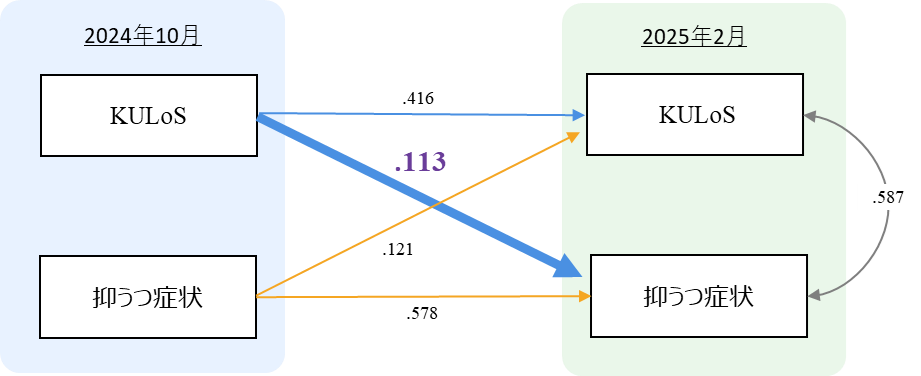
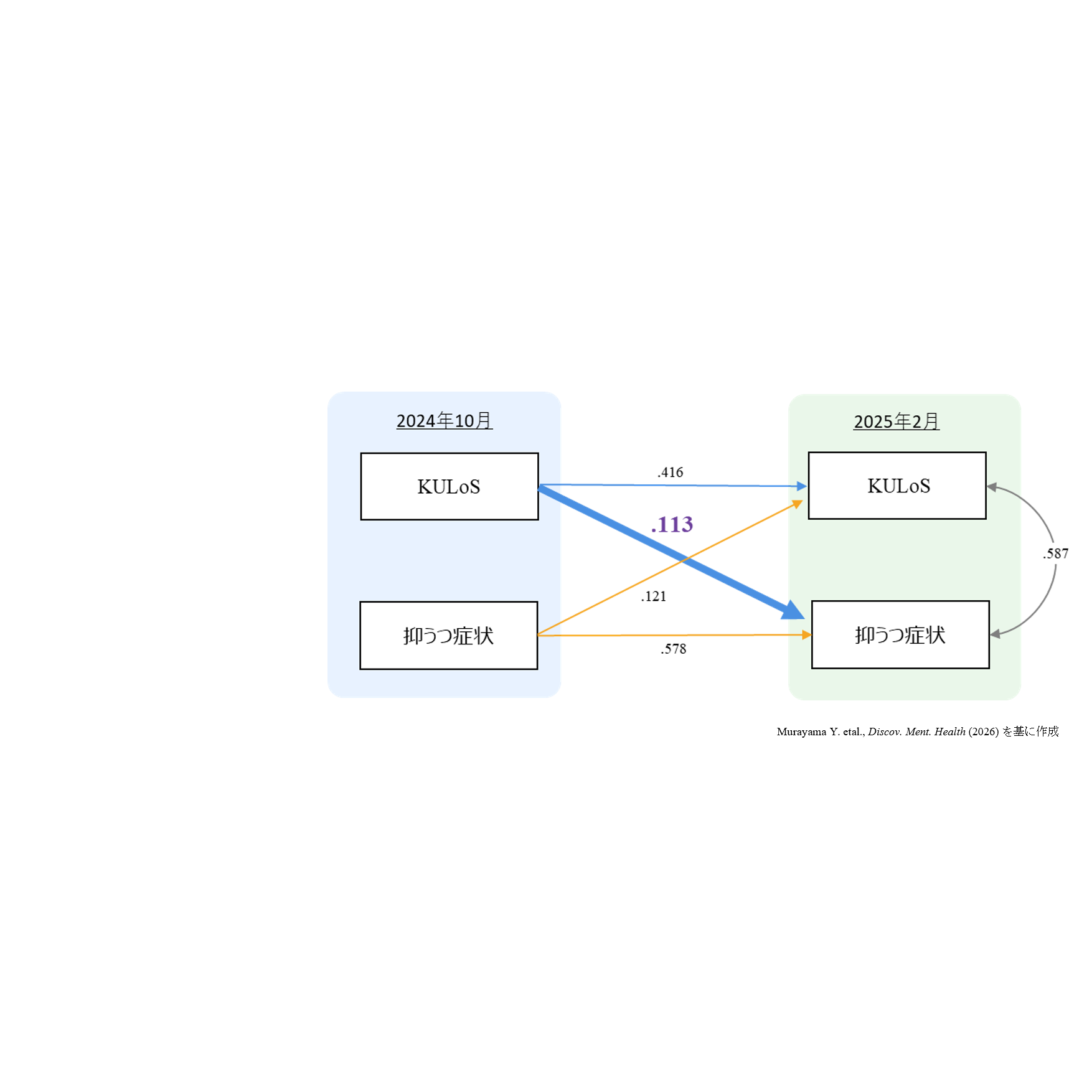
Figure 1. Predictive Validity of the KULoS
Values represent standardized regression coefficients. The reciprocal relationship between loneliness (KULoS) and depressive symptoms is illustrated; coefficients of 0.03, 0.07, and 0.12 are interpreted here as small, moderate, and large effects, respectively. (Based on Murayama Y. et al., Discov. Ment. Health (2026).)
Click here to see the press release【Japanese only】
Journal : Discover Mental Health
Researcher Information : Yasuo Murayama
Related Information
Research Center for Child Mental Development, Kanazawa University : https://kodomokokoro.w3.kanazawa-u.ac.jp/en/
College of Human and Social Sciences, Kanazawa University : https://hss.w3.kanazawa-u.ac.jp/en/
School of Humanities, College of Human and Social Sciences, Kanazawa University : https://jinbun.w3.kanazawa-u.ac.jp/english/index.html
Graduate School of Human and Socio-Environmental Studies, Kanazawa University : https://human-socio.w3.kanazawa-u.ac.jp/en/
 PAGE TOP