




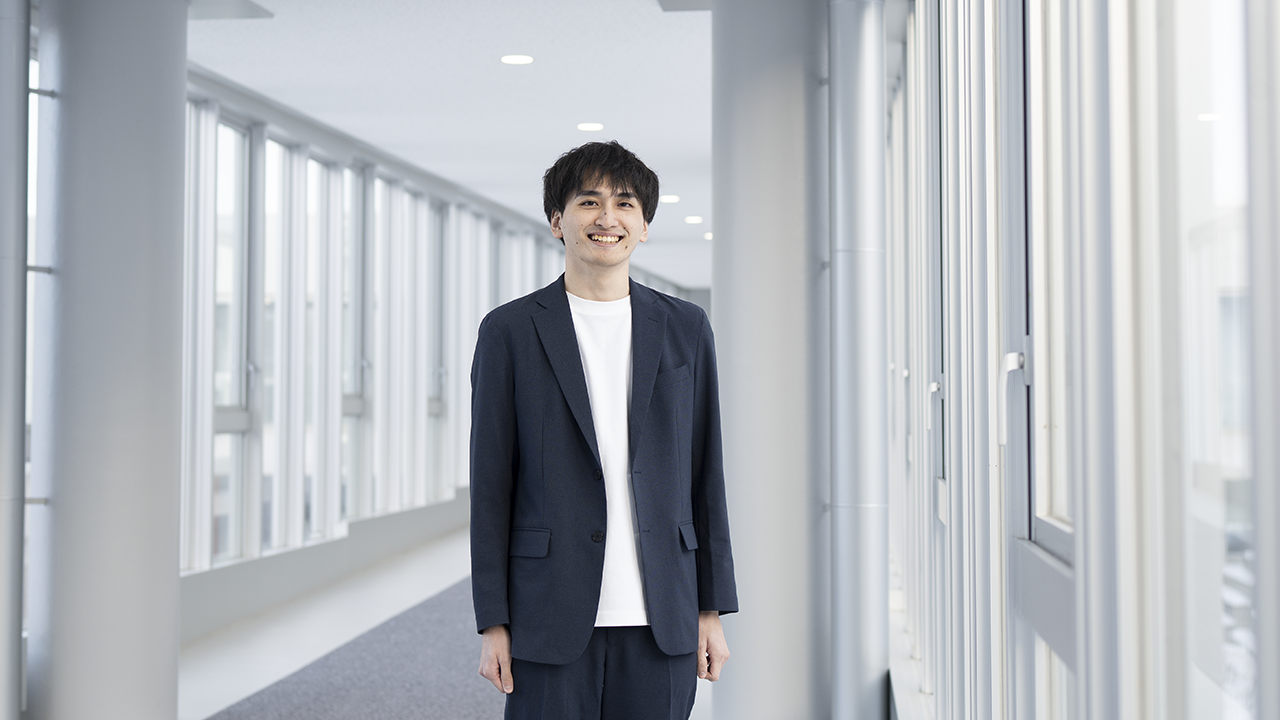
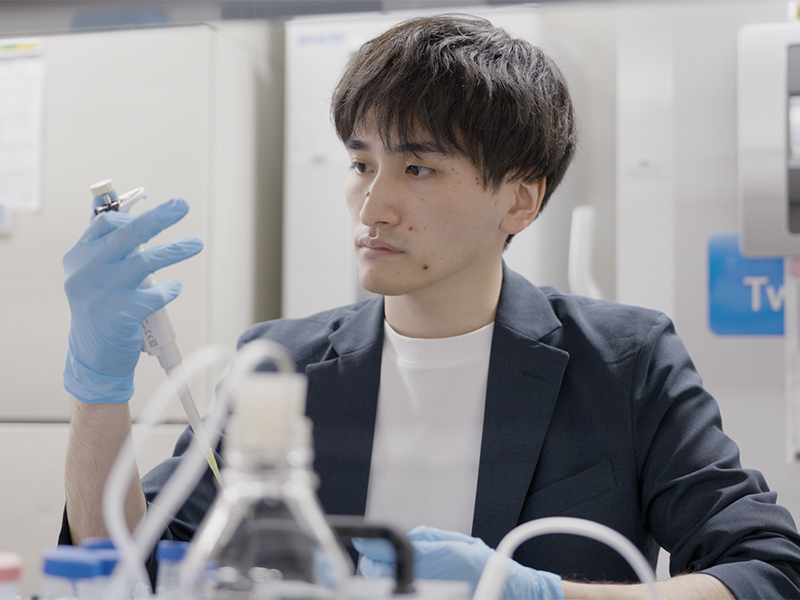
We interviewed Ibuki Yasuda, a first year doctoral student (at the time of the interview) in the Division of Health Sciences, Graduate School of Medical Sciences. Selected as aHaKaSe + student, he conducts interdisciplinary research in hematology. We asked about the motivation for pursuing a doctoral course and the rewards of their research. The interview video is available on the official research Instagram account .
What kind of research are you currently conducting?
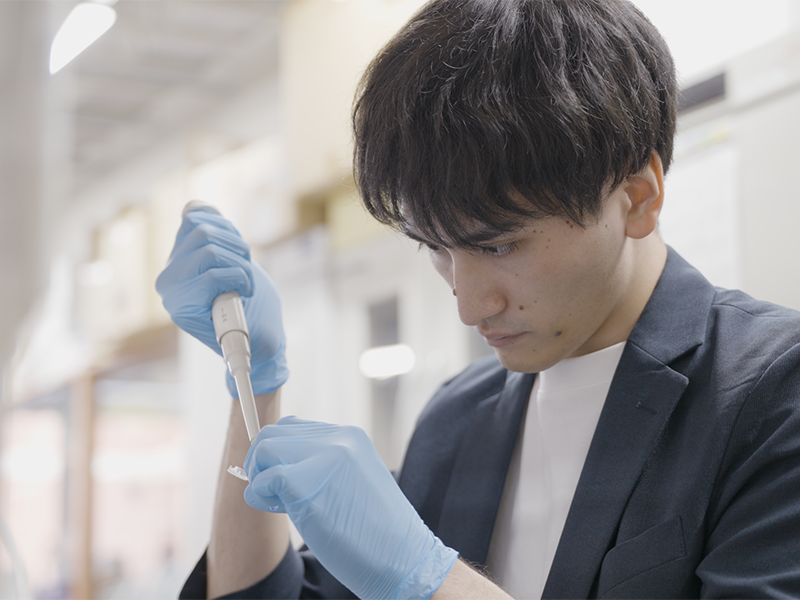
I am working on research in the field of hemostasis. In our blood, there is a protein called antithrombin that regulates the balance of blood so that it does not clot too much. The target of my research is a Japanese-designated intractable disease called "hereditary antithrombin deficiency," in which antithrombin does not function properly from birth. It is caused by a genetic mutation, but the detailed mechanism as to why this mutation leads to the symptoms has not yet been elucidated.
I am investigating the cause of the disease by combining cellular experiments based on genetic mutations with the method of analyzing proteins at the messenger RNA (molecule that transmits genetic information to cells) level, which Nano Life Science Institute (WPI Nano-LSI) specializes in. This research is a fusion of the different fields of health science and life science. More recently, we are also exploring the possibility of a therapeutic approach that would allow the normal production of antithrombin in the patient's body without the influence of genetic mutations.
What motivated you to pursue a doctoral course?
Vaguely, but by the time I was in junior high school, I had decided that I would become a graduate student someday. I think I had a longing to be someone who researched something, like a doctor of insects. When I was in elementary school, my grandfather was diagnosed with cancer, and I also had an early desire to be involved in the medical field.
I entered the Department of Laboratory Sciences, School of Health Sciences, College of Medical, Pharmaceutical and Health Sciences at Kanazawa University , where I studied to obtain a national qualification as a clinical laboratory technologist. During this time, I became interested in hematology and joined a laboratory in this field for my undergraduate research. This was my first experience engaging seriously in research. I immersed myself in experiments, and the sense of accomplishment I felt when I obtained results left a strong impression on me, leading me to decide to pursue graduate studies. In the master's program, I worked on different research topics and sometimes struggled to make progress as planned. During this time, I began a collaborative research project with the Nano Life Science Institute(WPI Nano-LSI) , where I encountered my current research theme.
The support from HaKaSe⁺ was a major factor in my being able to continue on to the doctoral course. I am now able to consider higher education as a realistic option because I am less worried about my financial situation. My family is also supporting me.
Are there any skills you have acquired through your research?
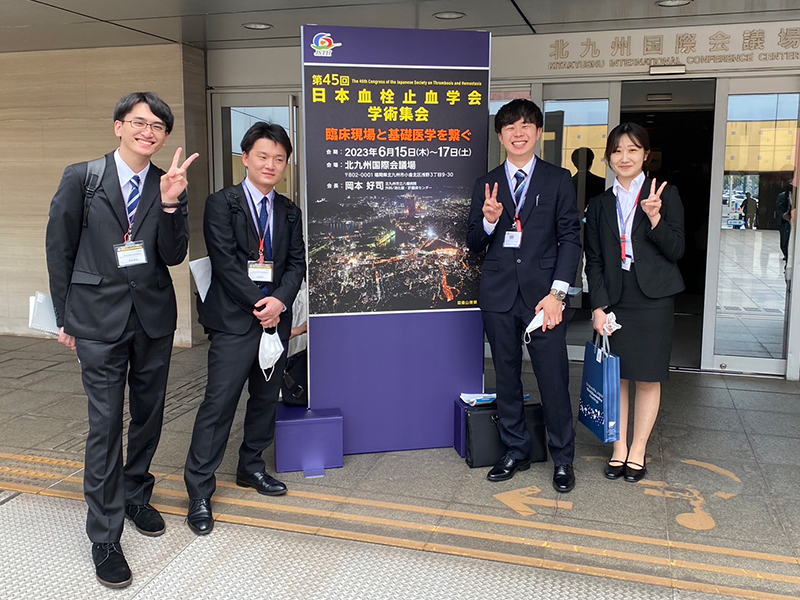
The most important is the ability to assemble and carry out research on my own. The ability to make plans, manage schedules, and execute them has become especially demanding since entering the doctoral program. I am also working on improving my English communication skills on my own, as I have many opportunities to interact with international students at Nano Life Science Institute (WPI Nano-LSI).
What support or programs have you found helpful at HaKaSe+?
First and foremost is the financial support. Thanks to an environment that allows me to concentrate on my research without a part-time job, I have time to think carefully about my future career as a researcher. In the annual "Gateway to Other Fields" program, I have the opportunity to talk with researchers in fields that I do not have much contact with at Division of Health Sciences, and I can learn about the activities of other laboratories, the latest findings, and many other aspects of the world.
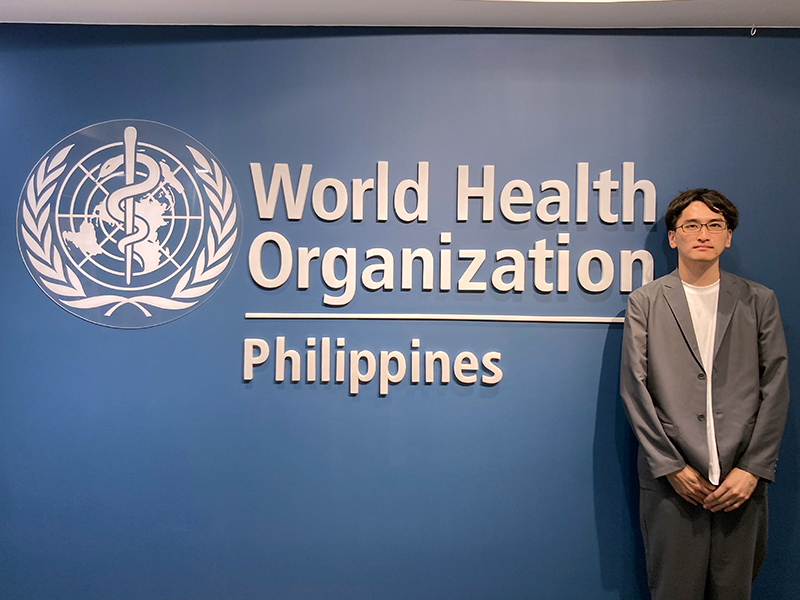
This year, I also studied abroad for a week in Manila, Philippines, where I had the opportunity to hear about infectious diseases and public health issues in Asia from Japanese people who are active internationally in international organizations such as WPRO (Western Pacific Regional Office), one of the regional offices of WHO (World Health Organization). It was a meaningful time. I am very grateful that HaKaSe+ supported the cost of my study abroad and took away my financial worries about traveling abroad.
How do you refresh your research?
I often listen to music. Since I learned to play the electone as a child, I have a sense of enjoying the sound itself rather than the lyrics, and I often listen to piano performances and instrumental music. I sometimes go to listen to orchestras. Recently, a junior student in the same dormitory recommended me to listen to idol music, and I have become addicted to it.
When I have time, I enjoy getting up early in the morning to grind coffee beans and brew a cup. I also visit a cafe. It is important to refresh myself between research, and coffee seems to have a calming effect on my brain.
Finally, what are your goals and dreams for the future?
In health science, we estimate diseases based on patients' test data and symptoms, so I believe it sits between medical care and basic research. In that sense, my ideal image of a researcher is to serve as a bridge between medical care and basic research. As the first pioneer selected by Division of Health Sciences for the Nano Precision Medicine and Science WISE Program (Hakase+ for WISE), I want to work hard to report fundamental data that will lead to the development of future therapeutics.
In the future, I have a desire to become a researcher like a university faculty member who can supervise students well rather than conducting research alone. To achieve this, I first need to develop my own skills and experience as a researcher. After a career in business or overseas, I hope to return to academia and become someone who can pass on my research to the next generation.
*Note: All affiliations, academic years, and other information are accurate as of the time of the interview.
(Tamayo Kido, writer)
 PAGE TOP