




Capturing CO₂ With Waste Heat
Professor Kodama's research focuses on capturing and concentrating CO₂ from flue gas and ambient air, then recycling it as fuel and other useful resources. His ultimate goal is to build a truly circular society—one where CO₂ is recycled just like plastic bottles.
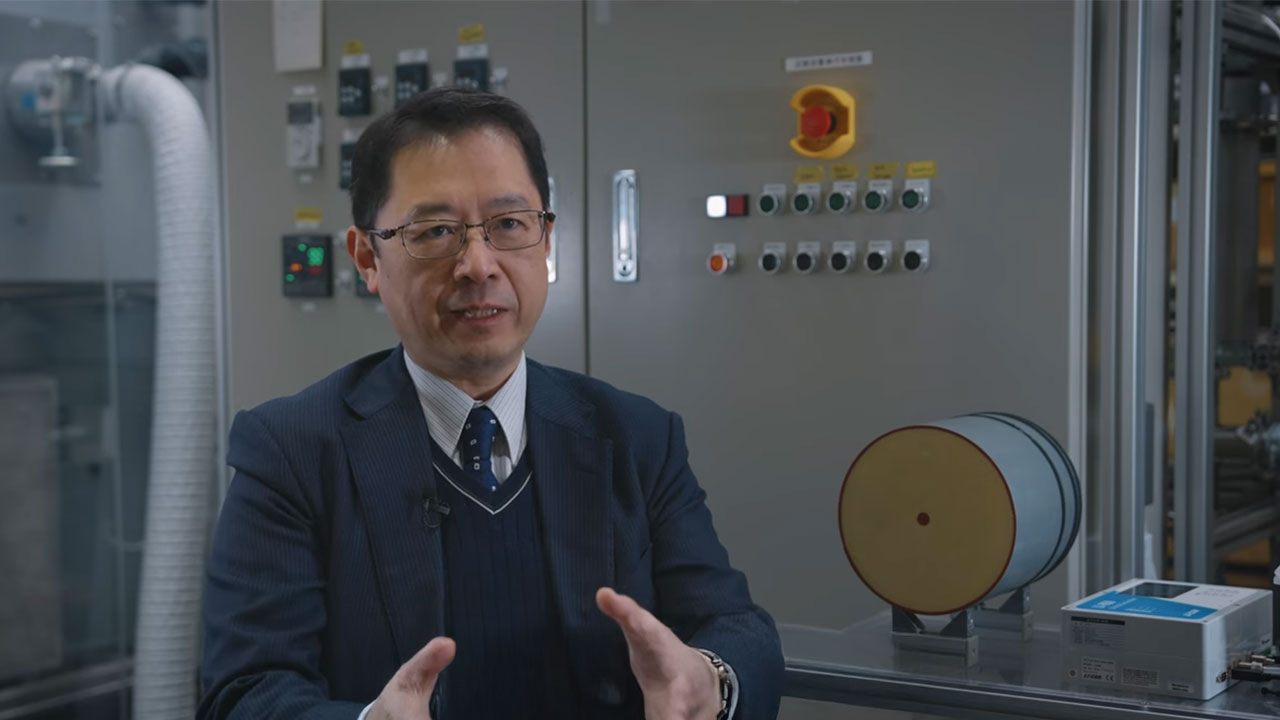
Industrial boilers and waste incinerators produce large amounts of heat. Yet the waste heat from these small-scale sources is typically below 100 °C, too low-grade to be put to practical use, so it is simply discarded. Professor Kodama is working to turn this waste heat into a tool for combating global warming. "Factories and incinerators release not only heat but also large quantities of CO₂. So I wondered if these facilities could use their own waste heat to capture their own CO₂," Professor Kodama explains.
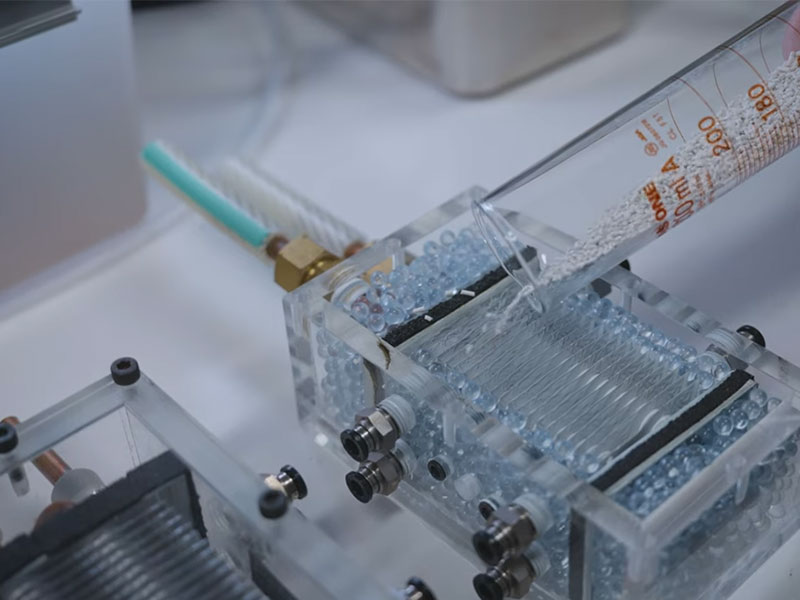
To make this idea a reality, Professor Kodama has been developing a process called temperature swing adsorption (TSA). In TSA, flue gas from a boiler or incinerator is passed through an adsorber, a device containing an adsorbent material that traps CO₂. Once the adsorbent is saturated, low-grade waste heat warms the adsorber, causing the CO₂ to desorb and be collected. This adsorption–desorption cycle, repeated at regular intervals, enables continuous recovery of highly concentrated CO₂.
"TSA itself is a well-established technique, but I have managed to raise the recovered CO₂ concentration to 95% by modifying the adsorption and desorption steps, and improving heat-transfer efficiency inside the adsorbent packed layer," Professor Kodama says. "I am now working to downsize the capture system so it can be deployed in urban settings and other everyday locations."
Bringing "Zero-Emission Incinerators" to the Real World
Professor Kodama's research actually began with water vapor. "I originally worked on dehumidification processes that used low-grade waste heat to adsorb and desorb moisture," Professor Kodama recalls. "As global warming became an increasingly urgent issue, I wondered how I could contribute. That was when I realized the same principle could be applied to CO₂ capture—and that became the starting point of my current research."
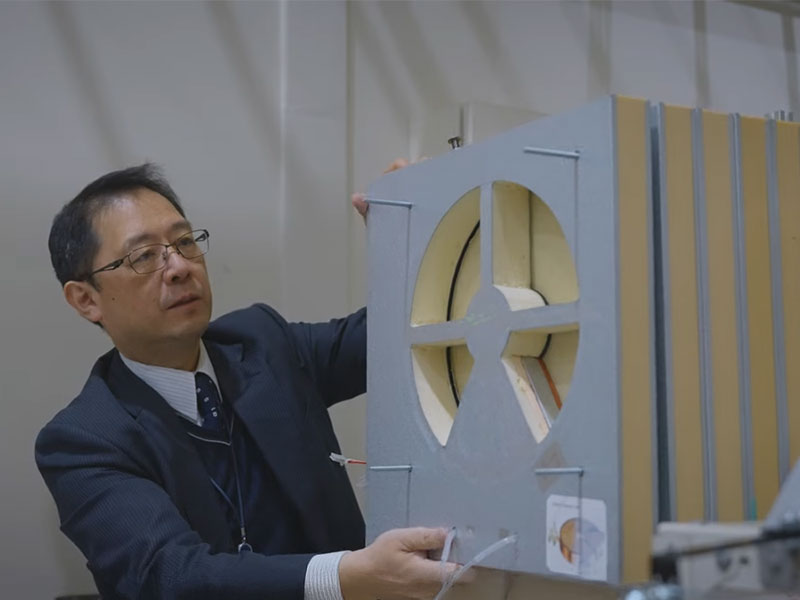
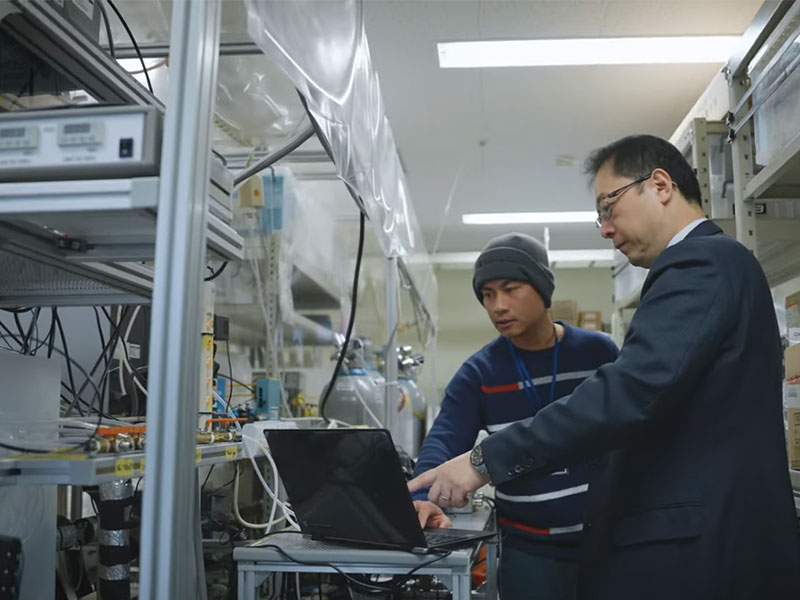
Professor Kodama's CO₂ capture technology is now entering the beginning stage of real-world implementation. He is conducting joint research with a company to develop an incinerator that emits no CO₂, and verification tests are already underway. "Laboratory-scale devices alone will never convince the world," Professor Kodama says. "The key is installing a reasonably large system at an actual site and showing people that it works."
Toward a Future Where CO₂ Is Recycled Like Plastic Bottles
While field verification of CO₂ capture technology moves forward, Professor Kodama envisions an even larger future—a society in which recycling CO₂ is taken for granted. "Recycling plastic bottles and aluminum cans is common sense today," Professor Kodama says. "But as global warming intensifies, fuels like gasoline and city gas will need to follow the same path—not just capturing the CO₂ they release when burned, but converting it back into fuel. We need to develop the technology now."
Realizing this "ultimate recycling society" requires two things—technology to capture CO₂ from a wide range of sources, and to convert the captured CO₂ into fuel. In recent years, Professor Kodama has also focused on Direct Air Capture (DAC), a technology that can recover CO₂ not only from emission sources but also directly from the atmosphere. Professor Kodama is focusing particularly on developing a “honeycomb rotary DAC” with an emphasis on simplifying the equipment, and he has already succeeded in capturing CO₂—of which only about 0.04% exists in the atmosphere—by increasing its concentration to over 90%. However, an efficient and rational integration with technologies that convert the captured CO₂ into fuel is required. In collaboration with researchers inside and outside the university, they are advancing research and development that takes a comprehensive view of the entire CO₂ capture and conversion system.
In a society where CO₂ recycling is the norm, people will be able to coexist with the global environment without sacrificing their quality of life. That, in turn, means passing on a healthy planet to the next generation. Professor Kodama's pursuit of this future continues.
(OHTA Makoto,Science writer)
Related Information
MIRAICHI Research Center
Professer Kodama's Showcase
Institute for Frontier Science Initiative
 PAGE TOP