
Kenjiro Ono / Moeko Shinohara Photo
Research NEWS

【Case Report】
First patient in Japan treated with donanemab achieved amyloid removal in the brain and completed treatment within one year

Faculty of Medicine, Institute of Medical, Pharmaceutical and Health Sciences, Professor /Faculty of Medicine, Institute of Medical, Pharmaceutical and Health Sciences, Associate Professor
小野 賢二郎/篠原 もえ子ONO, Kenjiro/SHINOHARA, Moeko

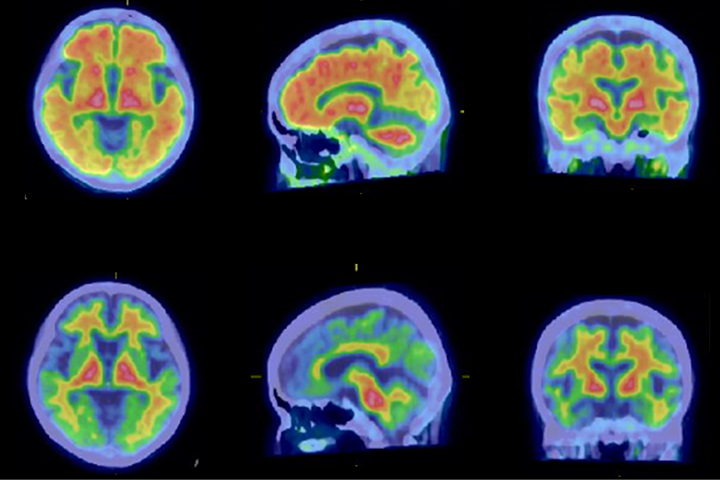
Professor Kenjiro Ono and Associate Professor Moeko Shinohara of the Faculty of Medicine, Institute of Medical, Pharmaceutical and Health Sciences, Kanazawa University, reported that amyloid removal in the brain was confirmed in an early Alzheimer’s disease (*2) female patient who received donanemab (*1) treatment at Kanazawa University Hospital, based on amyloid PET imaging performed one year after the start of treatment.

Donanemab is an anti-amyloid antibody drug for patients with mild cognitive impairment and mild dementia due to Alzheimer’s disease. This patient is the first person in Japan to receive donanemab treatment.

During the one-year treatment period, no serious adverse events were observed, and no apparent worsening of symptoms, including cognitive function, occurred. As sufficient amyloid removal in the brain was confirmed, the patient was able to complete donanemab treatment within one year.

It is expected that the accumulation and analysis of cases treated with anti-amyloid antibody drugs, such as this case, will contribute to further advances in Alzheimer’s disease treatment in the future.

This study was published online in the international journal "Neurology" on March 25, 2026.


Figure 1: Amyloid PET images of the patient treated with donanemab
Upper row: before treatment Lower row: after treatment
Donnanemab treatment resulted in the removal of amyloid from the brain.
*This figure is reprinted with permission from the article published in Neurology (©2026 Wolters Kluwer Health, Inc.).


【Glossary】
*1  Donanemab
Donanemab is a therapeutic agent for Alzheimer’s disease and is an antibody that selectively binds to amyloid plaques.
*2  Alzheimer’s disease
Alzheimer’s disease is a gradually progressive brain disorder that impairs memory and thinking ability, eventually leading to dementia, a condition that interferes with daily life. In the brains of patients with Alzheimer’s disease, changes such as senile plaques formed by the accumulation of amyloid‑β, tangles of abnormal nerve fibers (neurofibrillary changes caused by abnormal phosphorylation of tau protein), and loss of nerve cells are observed, and these changes progress over a long period of time.


Click here to see the press release【Japanese only】

Journal : Neurology

Researcher Information: Kenjiro Ono
      Moeko Shinohara

Related Information

School of Medicine, College of Medical, Pharmaceutical and Health Sciences / Graduate School of Medical Sciences, Kanazawa University : https://www.med.kanazawa-u.ac.jp/EN/index.html


FacebookPAGE TOP