




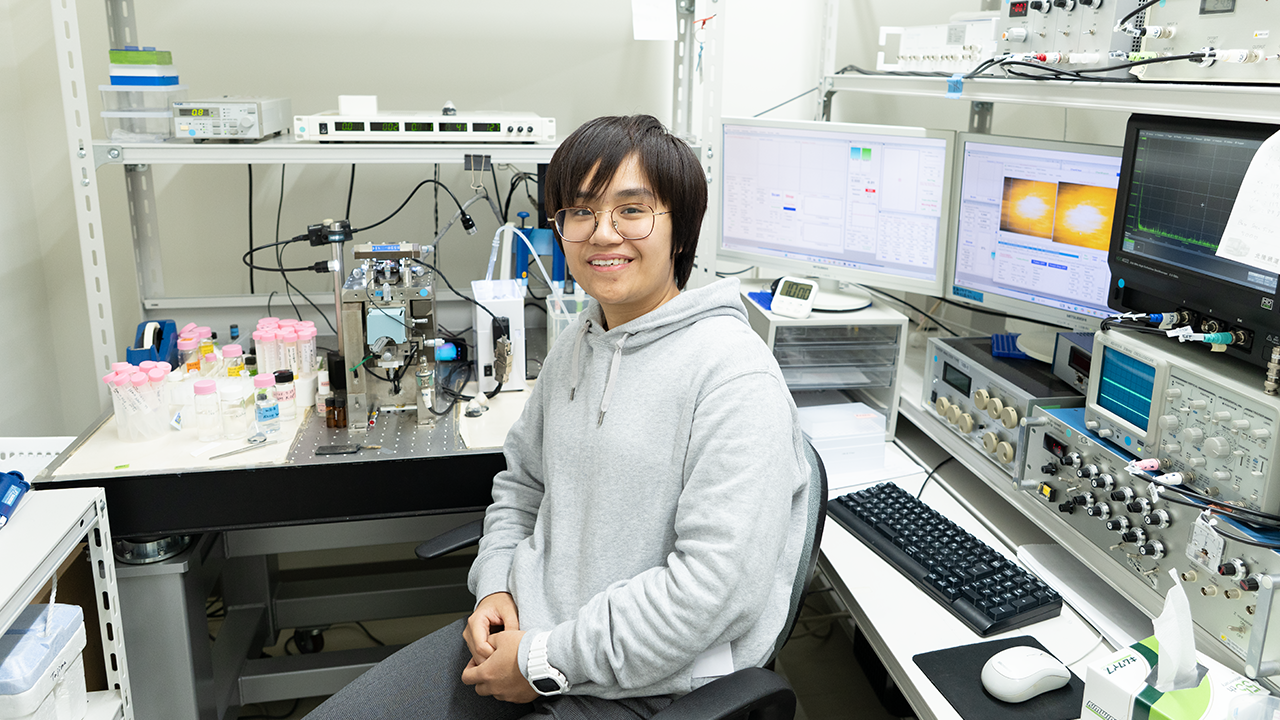
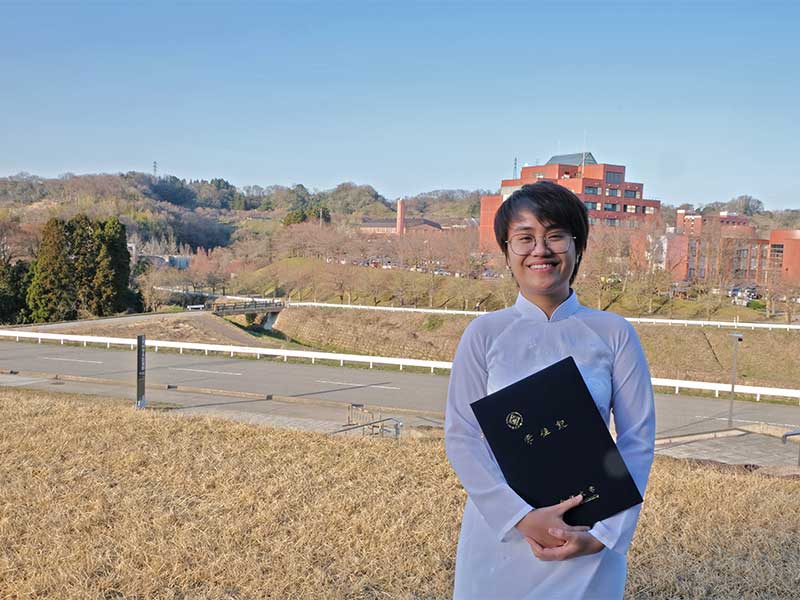
We interviewed TRAN NGOC TRANG from Vietnam, a HaKaSe+ selected student who is actively pursuing her doctoral degree. As a dedicated researcher striving toward earning a Ph.D., she shared with us her motivations for entering the doctoral program, the appeal and fulfillment she finds in her research, and her aspirations for the future. For the interview video, please click Official research instagram.
What kind of research are you currently conducting?
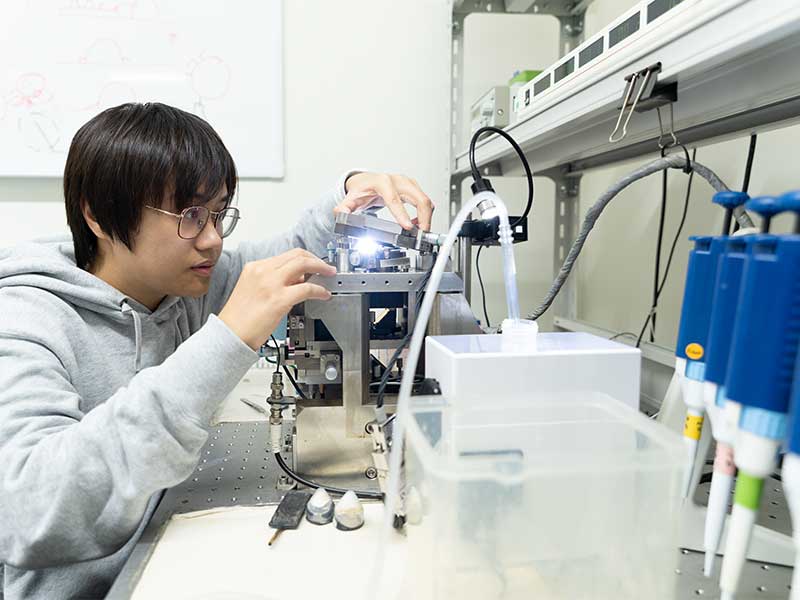
One of the factors deeply involved in the onset of Alzheimer’s disease is "oxidative stress." I am conducting research focusing on the function and structure of the protein "human Prx2 (peroxiredoxin)," which is involved in regulating oxidative stress. Using high-speed atomic force microscopy (high-speed AFM), I am observing the changes in the structure of Prx2 in real time. It is very exciting to be able to directly capture the dynamics of how molecules actually move.
What motivated you to pursue a doctoral course?
Before studying at Kanazawa University, I earned a bachelor's degree in biology from a university in my home country of Vietnam. During that time, I had an unforgettable experience. I met patients suffering from Alzheimer’s disease and witnessed firsthand how they gradually forgot their loved one - family, friends, and other important people. No one wants to lose cherished memories, and no one wants to be forgotten. This experience sparked a strong desire in me to make a meaningful contribution to the world. I want to understand the molecular mechanisms of Alzheimer’s disease and contribute to the development of future treatments. That feeling is the driving force behind my research. I felt that obtaining a doctoral degree was an essential step towards realizing that dream.
Why did you choose Kanazawa University?
I have long had a strong interest in Japan, as the country is highly regarded for its high‑quality research and advanced technologies in the life sciences. While researching various universities in detail, Kanazawa University stood out for its cutting‑edge research environment, including the high-speed atomic force microscope (high-speedAFM ), an essential tool for studying protein dynamics. I became convinced that it would be the ideal place to refine my skills and engage in meaningful research.
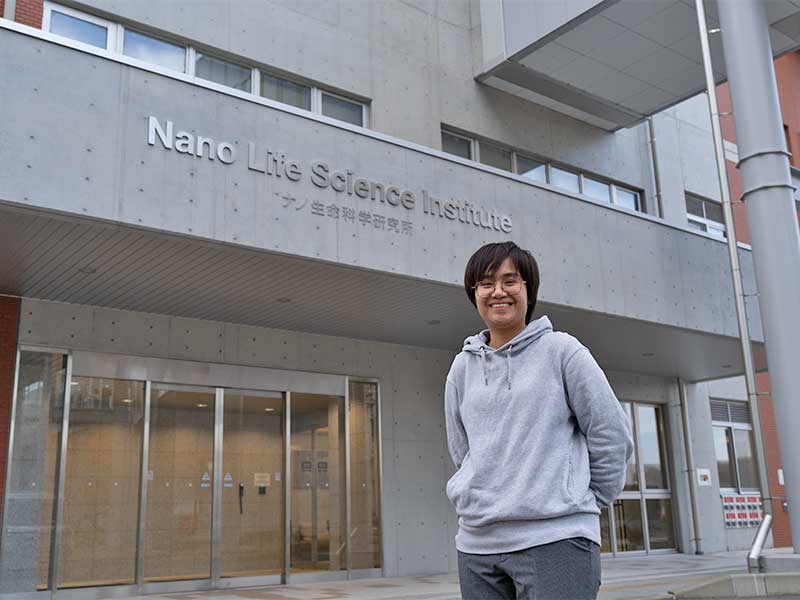
In addition, I am working at Nano Life Science Institute (WPI-NanoLSI),which has not only advanced research facilities but also an open research environment where researchers in different fields can freely exchange ideas with each other, which is a great attraction.
Do you have any memories or favorite places in Kanazawa?
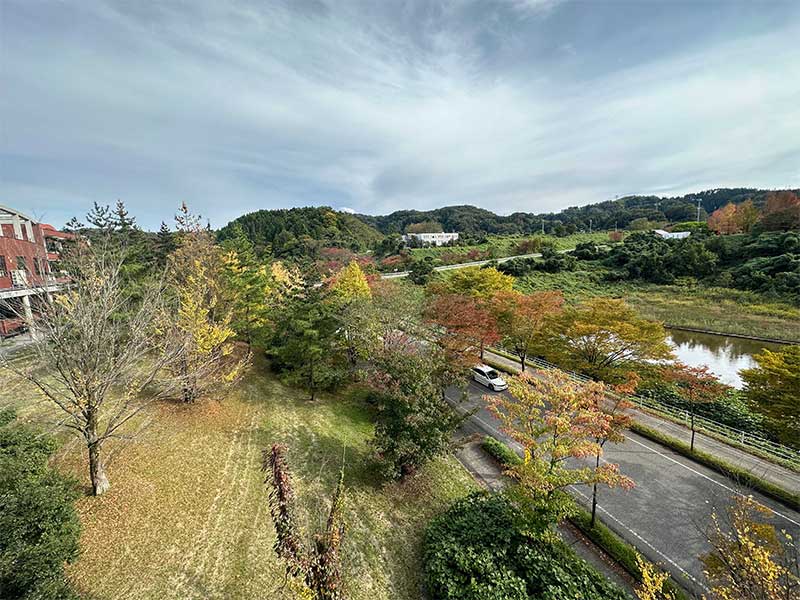
I love taking pictures. So, after a day of research activities or on my days off, I often take photos of the university and the city of Kanazawa with my smartphone. On Kanazawa University campus, you can enjoy the beautiful nature of each season, and the atmosphere of the autumn foliage is especially wonderful. Also, there are many friendly people in Kanazawa, and I truly enjoy the time I spend here.
Finally, could you tell us about your future aspirations?
After completing the course, I would like to continue my research as a postdoctoral fellow at a university or research institute in Japan. My goal is to contribute to the elucidation of protein dynamism at the molecular level while growing as a researcher.
And I have another big dream. As in my home country of Vietnam, but also here in Japan, I have noticed that many young students leave research after receiving their bachelor's or master's degrees. Research is not something that is exclusive to a particular country or institute, but should be a global endeavor. I would be happy if I could be the link between many young people so that they will want to continue their research. In the future, I would like to use the expertise and experience I have gained here to become a bridge between researchers in Japan and Vietnam.
Nowadays, it is mainly the large research centers in Europe and the U.S. that attract many famous researchers, but I hope that Japan, Vietnam, and Asia, as well as various other countries and regions around the world, will become places that attract researchers.
*Note: All affiliations, academic years, and other information are accurate as of the time of the interview.
(Tamayo Kido, writer)
 PAGE TOP