




A collaborative research group led by Professor Seiji Yano of the Division of Respiratory organ internal medicine, Faculty of Medicine, Institute of Medical, Pharmaceutical and Health Sciences, Kanazawa University / Nano Life Science Institute (WPI‑NanoLSI), Assistant Professor Shigeki Sato of the Department of Clinical Laboratory, Kanazawa University Hospital, and Associate Professor Katsuya Sakai of the Division of Genome Biology, Cancer Research Institute / Nano Life Science Institute (WPI‑NanoLSI), has revealed for the first time that amivantamab (*2), a newly approved bispecific antibody (*1) for lung cancer, binds strongly to EGFR (*4) through its interaction with MET (*3), thereby inducing a potent antibody‑dependent cellular cytotoxicity (ADCC) (*5) response that kills lung cancer cells.
Amivantamab is a bispecific antibody that binds to both EGFR and MET, and has demonstrated superior clinical efficacy compared with conventional anti‑EGFR antibodies. It was approved for lung cancer treatment in November 2024. However, the mechanism underlying its stronger antitumor effects compared with anti‑EGFR antibodies had remained unclear.
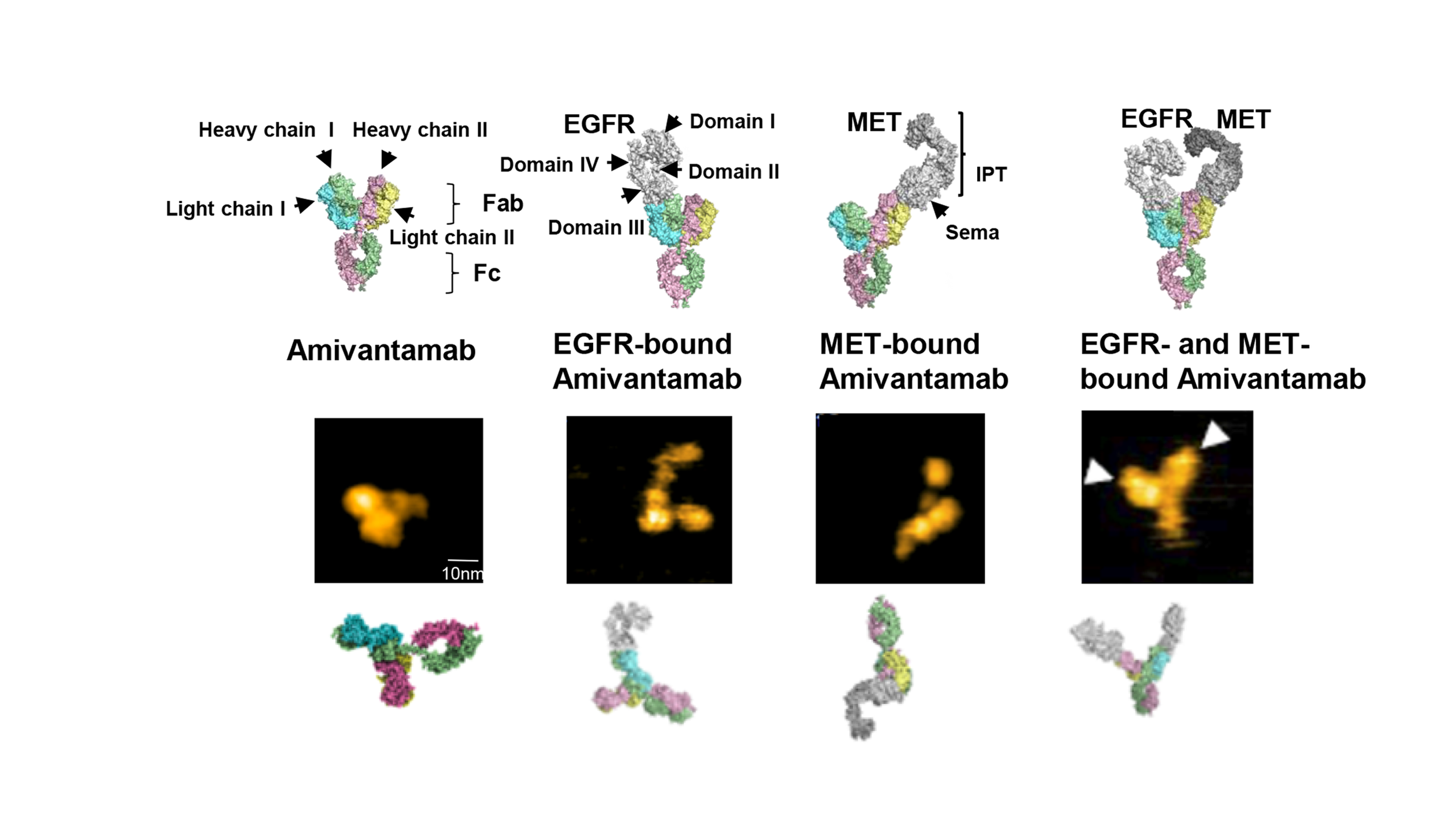
Using observations made with the high‑speed atomic force microscope (HS‑AFM) (*6) developed at the Nano Life Science Institute, the research group discovered that amivantamab binds more strongly to EGFR in the presence of MET. They further found that this mechanism enables amivantamab to bind strongly to EGFR and MET on the surface of lung cancer cells, efficiently bringing immune cells closer to cancer cells and thereby inducing strong ADCC to kill lung cancer cells.
This study is the first to demonstrate that binding to MET plays a crucial role in the antitumor effects of amivantamab, and the findings are expected to serve as a catalyst for the development of next‑generation bispecific antibodies.
The research results were published online in the journal "Cancer Science" on November 9, 2025.
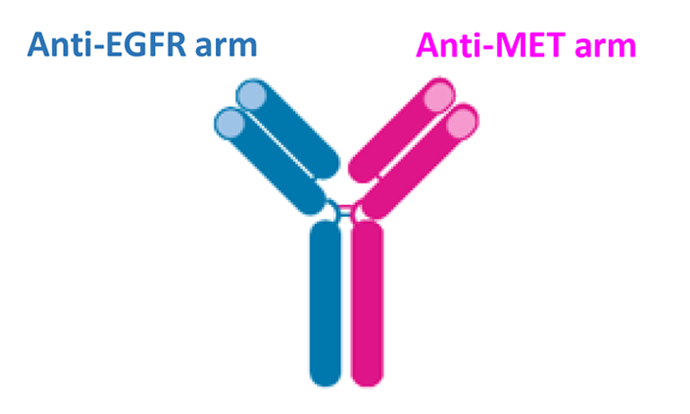
Figure 1: Schematic Diagram of the Bispecific Antibody Amivantamab
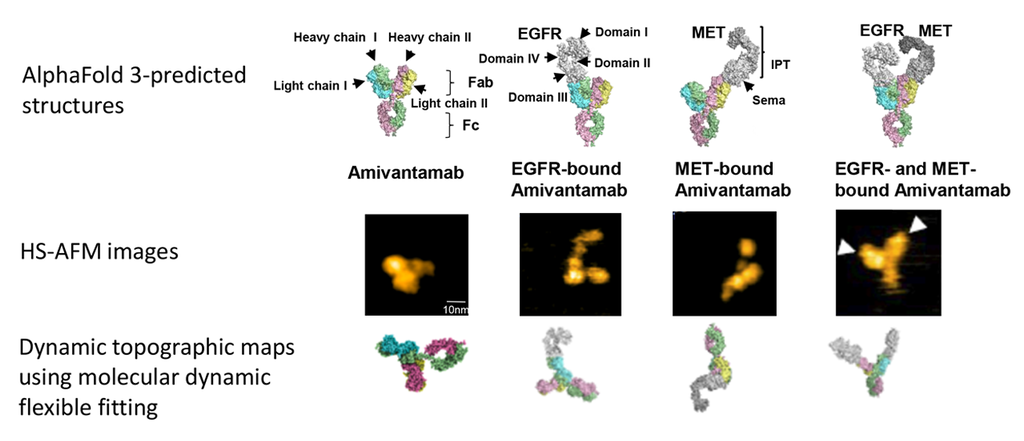
Figure 2: Predicted Structure of Amivantamab and HS‑AFM Images
(White arrowheads indicate the binding sites for EGFR and MET)
【Glossary】
*1 Bispecific Antibody
Unlike conventional monoclonal antibodies, a single antibody molecule can bind two different antigens.
*2 Amivantamab
A fully human bispecific monoclonal antibody targeting EGFR (epidermal growth factor receptor) and MET (hepatocyte growth factor receptor).
*3 MET
A receptor for hepatocyte growth factor (HGF). MET is highly expressed in many cancers, including lung cancer, and is considered an important therapeutic target.
*4 EGFR
Epidermal growth factor receptor. In lung cancer, mutations such as exon 19 deletion, exon 21 L858R, and exon 20 insertion are known to drive oncogenesis. EGFR tyrosine kinase inhibitors and amivantamab are approved treatments for EGFR‑mutant lung cancer.
*5 Antibody‑Dependent Cellular Cytotoxicity (ADCC)
An immune reaction in which antibodies recognize and bind tumor antigens, enhancing tumor cell killing by immune cells such as natural killer (NK) cells.
*6 High‑Speed Atomic Force Microscope (HS‑AFM)
A microscope capable of visualizing nanoscale samples as “videos” in air or liquid. Conventional AFM could only capture still images due to slow scanning speed; HS‑AFM overcomes this limitation and enables real‑time video imaging.
Journal : Cancer Science
Researcher Information : Seiji Yano
Sigeki Sato
Katsuya Sakai
Related Information
Nano Life Science Institute, Kanazawa University
Cancer Research Institute, Kanazawa University
 PAGE TOP