




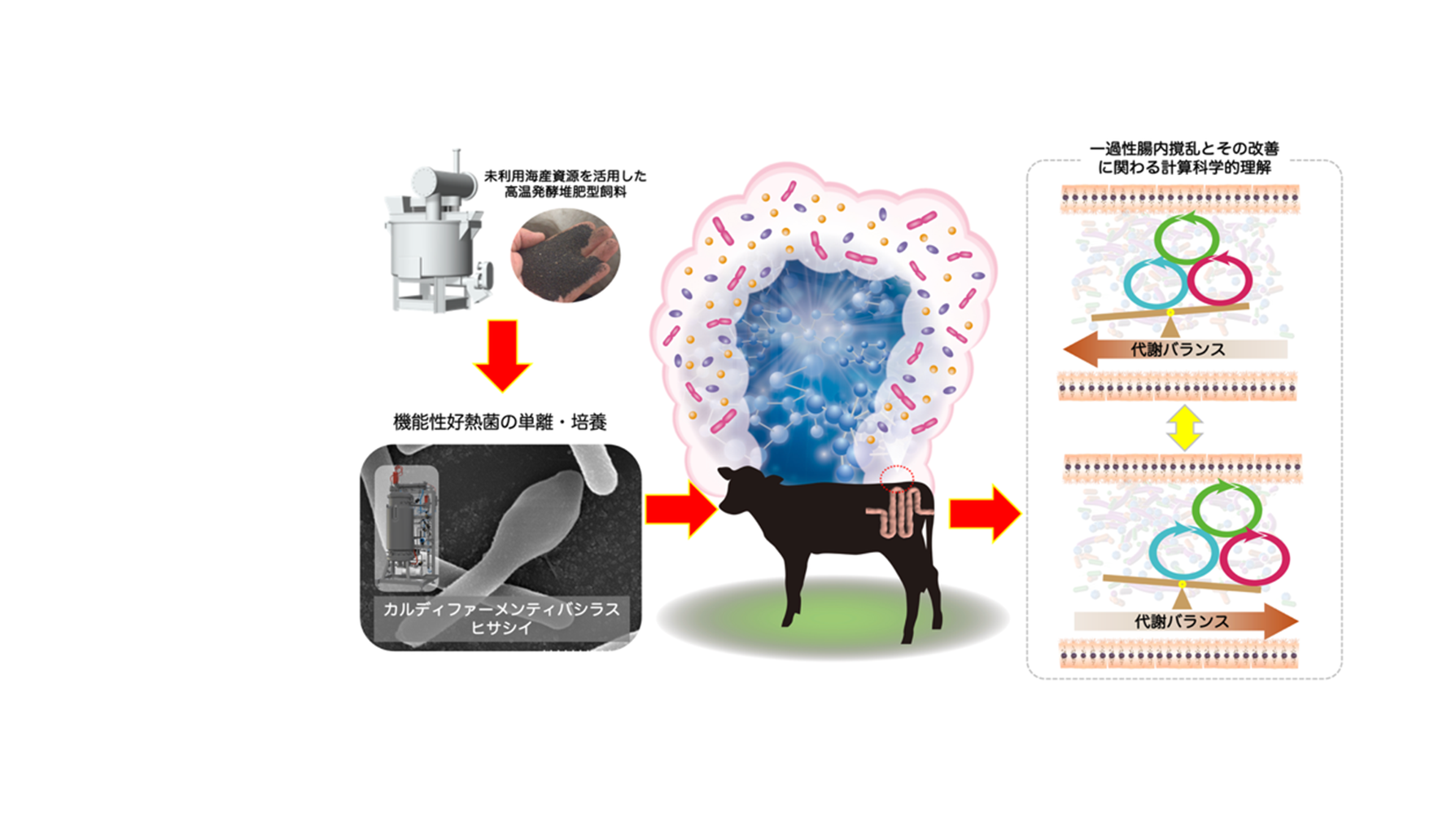
A collaborative research group led by researchers from RIKEN and Kyushu University, in which Associate Professor Takumi Nishiuchi of the Bioscience Core Facility, Research Center for Experimental Modeling of Human Disease, Kanazawa University participated, has used integrated multi-omics analysis to reveal part of the mechanism by which the thermophilic bacterium Caldifermentibacillus hisashii (C. hisashii ), derived from high-temperature fermented feed, alleviates diarrhea in calves used as a livestock model.
Through proteomic analysis of the culture supernatant of C. hisashii, Associate Professor Takumi Nishiuchi detected proteins associated with the butyrate production pathway and the biosynthetic pathway for 2-aminoisobutyric acid (AIB)-containing peptides, both of which had been predicted by genome analysis, providing protein-level evidence that these pathways may be functional in the bacterium. As livestock production that does not rely on antibiotics is increasingly sought worldwide to prevent the spread of antimicrobial resistance (AMR), the findings of this study suggest a valuable alternative approach.
The results of this study were published online in Microbiome on August 5, 2026.
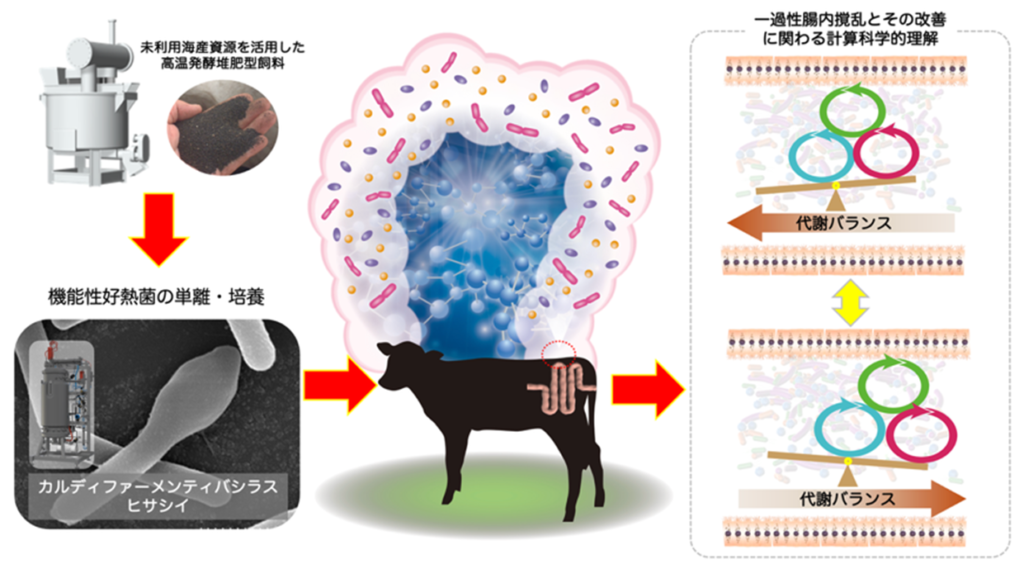
Figure: Overview of This Study
Journal : Microbiome
Researcher Information : Takumi Nishiuchi
Related Information
Research Center for Experimental Modeling of Human Disease, Kanazawa University
Graduate School of Natural Science and Technology, Kanazawa University
 PAGE TOP