




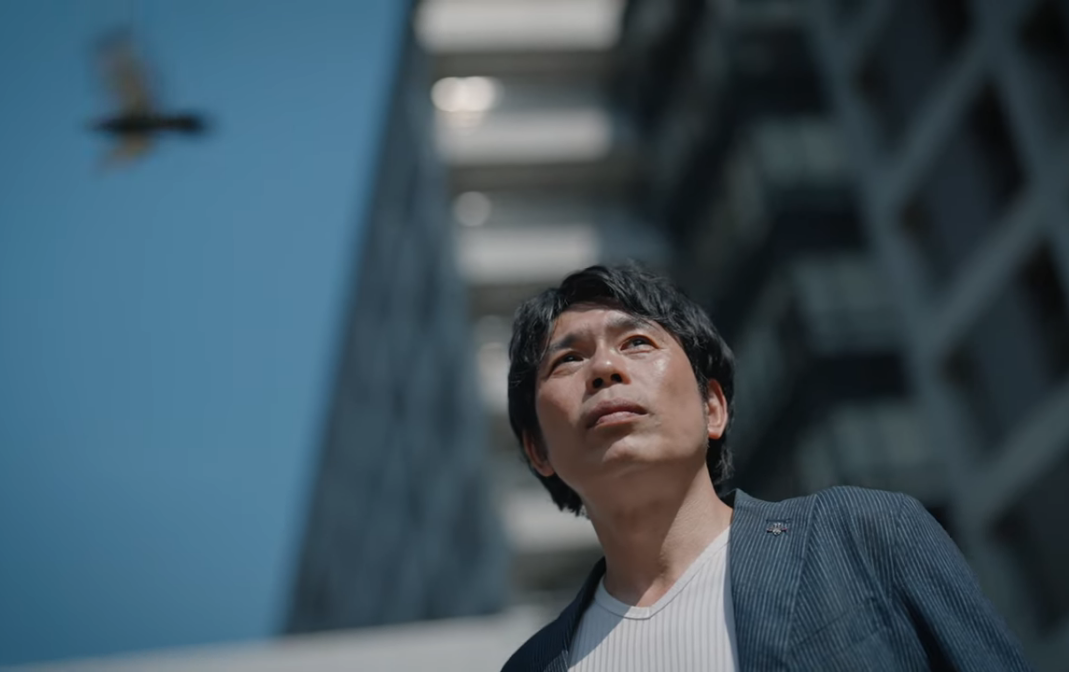
Fascinated by Complexity
The origins of Professor Satoshi Sunada’s aspiration to become a researcher can be traced back to his fascination with physics. During high school, he was captivated by the way mathematics could explain a wide range of phenomena in the natural world, inspiring him to pursue a career in science and uncover the underlying mechanisms himself. As a university student, he became particularly interested in the study of chaos, which deals with complex phenomena, seemingly unpredictable phenomena, and joined a laboratory dedicated to investigating the intricate dynamics of light. There, he encountered two themes that would shape his future research career: complexity and light. “Complexity can also be understood as a form of diversity,” Professor Sunada explains. He believes that the richness of both human society and the natural world stems from the complexity that underlies them. When diverse elements interact, unexpected phenomena and new forms of value can emerge. The desire to understand such complexity continues to drive his research. After earning his doctoral degree, he worked at a corporate research laboratory, where he explored the intersection of light and information science and investigated the vast potential of combining the two. His enduring curiosity to uncover hidden mechanisms within complex systems and reveal phenomena that have yet to be discovered has led him to his current research at the frontier of photonics and artificial intelligence (AI).
Optical Science and AI
Professor Sunada is currently engaged in research that integrates photonics and AI to develop next-generation information processing technologies. Just as humans perceive and understand the world through light, he envisions computers that can process information using light itself. While AI has advanced rapidly in recent years, its growing computational demands have brought with them a significant challenge: increasing energy consumption. To address this issue, he focuses on two unique properties of light: ultra-high speed and low energy consumption. By harnessing light for information processing, it becomes possible to analyze data at unprecedented speeds, observe phenomena that were previously too fast to capture, and monitor changes in real time. His research has included the development of optical computing systems inspired by biological neural networks as well as technologies for visualizing extremely fast phenomena. Beyond simply achieving faster computation, his goal is to enable scientists and engineers to see what was previously unobservable. AI plays a crucial role in this vision. AI excels at identifying patterns and extracting meaningful features from vast amounts of data, and combining it with the speed of optical information processing opens new possibilities for discovery. Together, optical computing and AI can extract hidden information from phenomena that are too complex or too rapid for humans alone to fully comprehend. For Professor Sunada, optical information processing is not merely a means of accelerating computation. Rather, it is a tool for expanding the capabilities of computers, enabling the observation of previously inaccessible phenomena and deepening our understanding of the world. Through the convergence of optical science and AI, he seeks to create new pathways to scientific discovery and technological innovation.
Toward a World Yet Unknown to Humanity
“My goal is to contribute to expanding the frontiers of human knowledge.” For Professor Sunada, the ultimate objective is not simply to advance AI or optical technologies themselves. Rather, he seeks to create new approaches to information processing and new tools that accelerate discovery, enabling people to reach worlds of knowledge that remain unexplored. “I want to help expand our collective knowledge. If I can provide even one new way of achieving that, I would consider it meaningful.” This vision is also reflected in his approach as a researcher. “I conduct research with the ambition of changing the world,” he says. “If I am going to pursue research, I want it to be the kind that people find truly exciting and impactful.” As a university professor, he is equally committed to inspiring the next generation. “I want my students to see what it looks like to compete on the global stage.” Remaining at the forefront of research while demonstrating that commitment to students is an important part of his mission. “I want to create something that has a real impact.” Behind these words lies a deep curiosity about the hidden mechanisms embedded within complex systems and a desire to broaden humanity’s understanding through new discoveries. Driven by this spirit of inquiry, Professor Sunada is working at the intersection of optical science and AI to open doors to worlds that humanity has yet to discover.
(Science writer: Yuko MITERA, English translation: Md Abul Kalam SIDDIKE)
 PAGE TOP