




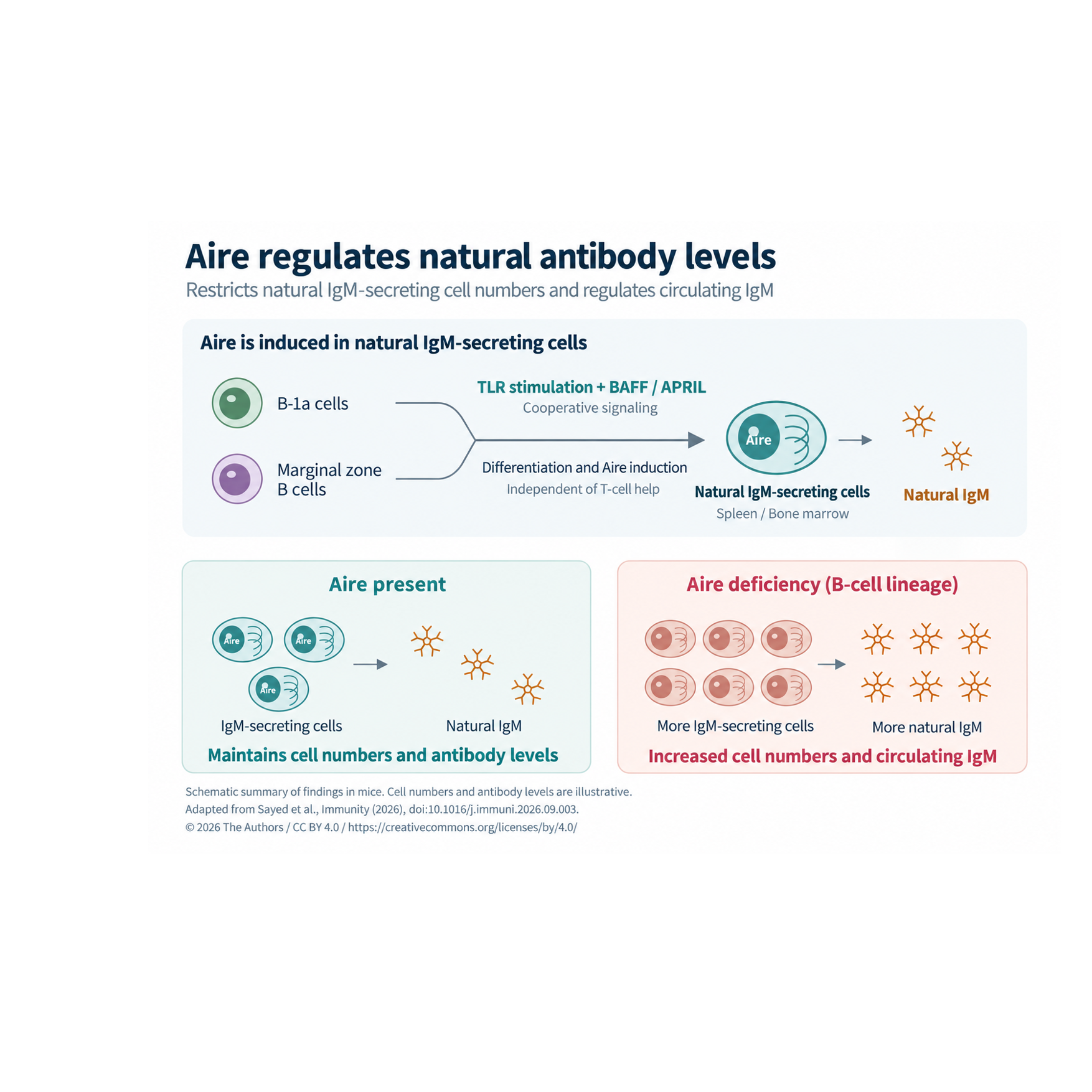
An international research team led by Associate Professor Tomoyoshi Yamano of the Faculty of Medicine and the Nano Life Science Institute (WPI-NanoLSI), Kanazawa University, together with Professor Ludger Klein of LMU Munich, has discovered in mice that Aire (* 1), a molecule best known for its role in preventing autoimmunity, regulates the number of cells that produce natural IgM (* 2), a type of natural antibody.
Aire has long been studied as a key molecule in the thymus, where it helps train immune cells not to attack the body's own tissues. However, its functions outside the thymus have remained largely unknown. In contrast, natural IgM is an antibody that is present in the body even before immune responses triggered by infection or vaccination occur. It plays important roles in the early defense against pathogens and in the removal of unnecessary or damaged cells.
In this study, the researchers found that Aire is expressed in natural IgM-producing cells located in the spleen and bone marrow. They further demonstrated that mice lacking Aire specifically in the B-cell lineage exhibited increased numbers of natural IgM-producing cells and elevated levels of IgM in the bloodstream. These findings reveal that Aire acts within natural IgM-producing cells themselves and contributes to maintaining appropriate numbers of these cells and normal levels of natural antibodies.
The study identifies a previously unrecognized role for Aire in regulating natural antibody production, extending its known function beyond immune tolerance in the thymus.
The findings were published online in the international scientific journal Immunity on October 1, 2026 (JST).
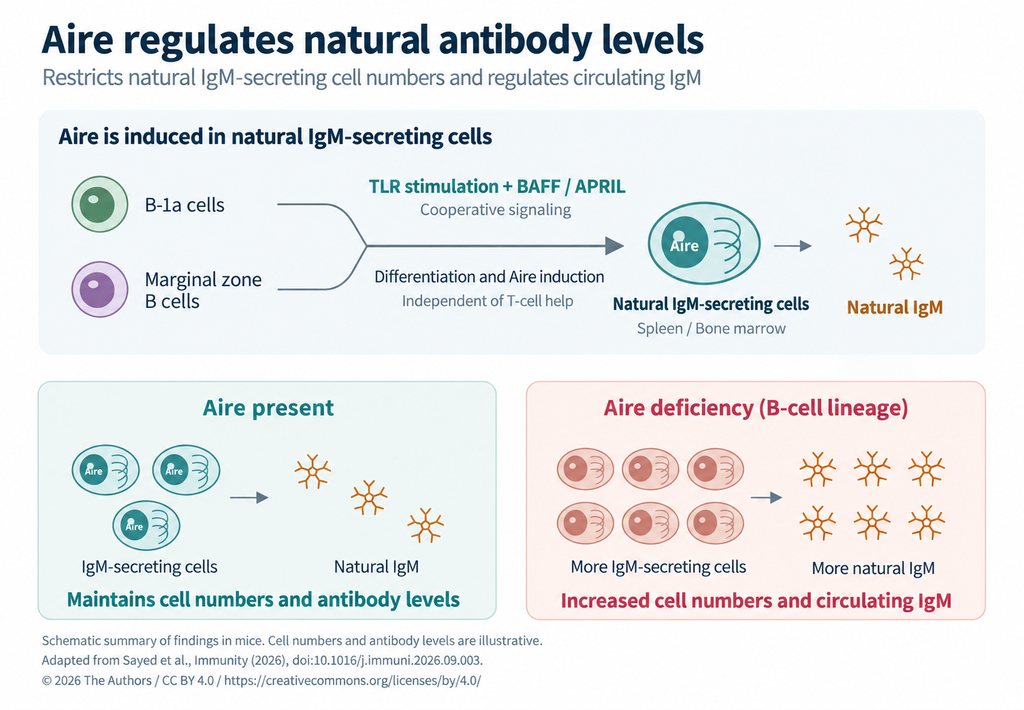
Figure 1. Aire regulates natural IgM-secreting cells and natural antibody levels
B-1a cells and marginal zone B cells differentiate into IgM-secreting cells in response to innate immune stimulation. During this process, signals from Toll-like receptors (TLRs) cooperate with BAFF or APRIL signaling to induce Aire expression. Aire acts intrinsically within IgM-secreting cells to restrain their numbers. Loss of Aire in the B-cell lineage results in an increased number of IgM-secreting cells and elevated levels of natural IgM in the circulation.

【Glossary】
*1 Aire (autoimmune regulator)
A protein that plays an important role in preventing immune responses against the body’s own tissues. In medullary thymic epithelial cells, Aire promotes the expression of many tissue-specific genes and supports T-cell tolerance to self-antigens. The human gene is designated AIRE, whereas the mouse gene is designated Aire.
*2 Natural IgM
Natural IgM is a class of antibody that is produced continuously, even in the absence of infection or deliberate immunization. It is polyreactive, meaning that it can recognize a wide range of different molecules. Natural IgM contributes to early defense against pathogens and to the clearance of dead cells and cellular debris. Although it can recognize certain self-derived components, this property does not necessarily lead to the development of autoimmune disease.
Click here to see the press release.【Japanese only】
Journal : Immunity
Researcher Information : Tomoyoshi Yamano
Related Information
College of Medical, Pharmaceutical and Health Sciences, Kanazawa University
Faculty of Medicine, College of Medical, Pharmaceutical and Health Sciences・Graduate School of Medical Sciences, Kanazawa University
Department of Immunology, Graduate School of Medicine, Institute of Medical, Pharmaceutical and Health Sciences, Kanazawa University
Nano Life Science Institute (WPI-NanoLSI), Kanazawa University
 PAGE TOP