




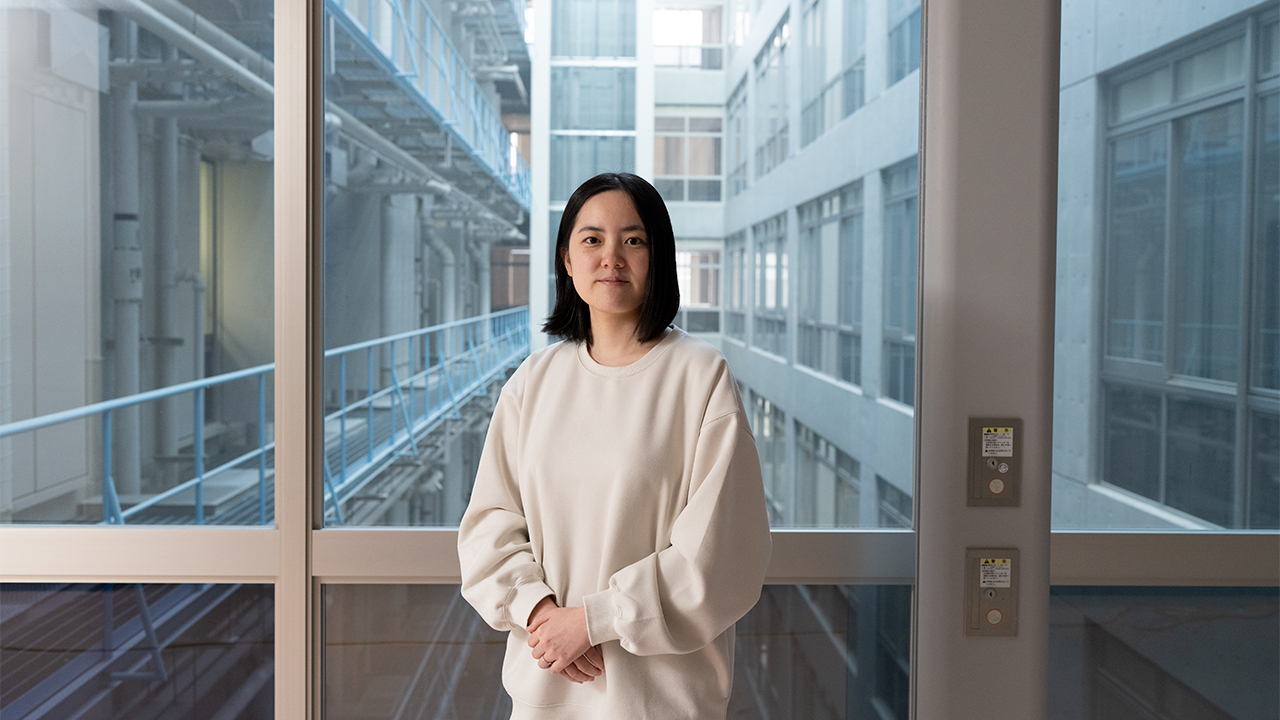
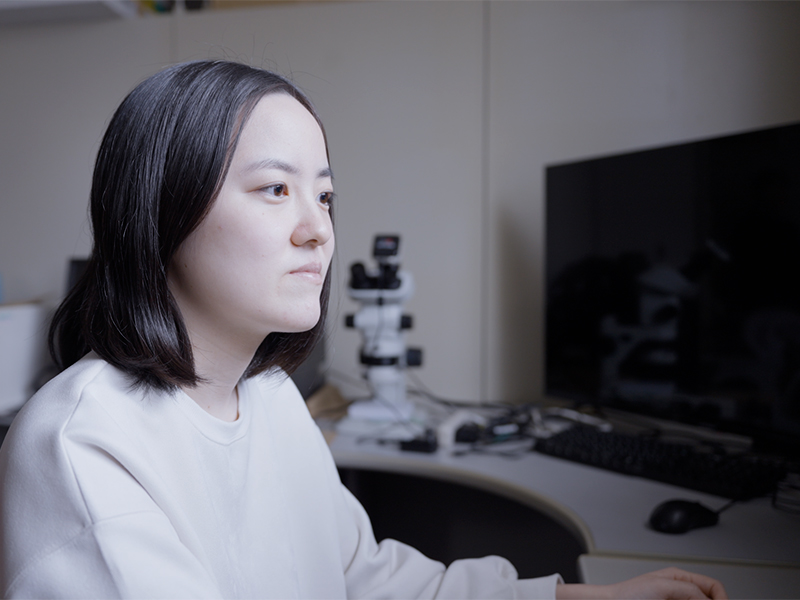
We interviewed Haruka Murata, who was a first-year doctoral student (at the time of the interview) in Division of Pharmacy, Graduate School of Medical Sciences. As a HaKaSe + selected doctoral student, she also chose to get married while pursuing her research. We asked her about the appeal of the doctoral program, how rewarding it is to do research, and how she balances her research and her life. You can watch the interview video on Official research instagram.
What inspired you to pursue a doctoral program?
When I was a high school student, I had the opportunity to do research on "craters on the moon" as an extracurricular activity and give a poster presentation. It was then that I first felt that research could be fun. As the three years of high school passed by so quickly, I became aware that I might like to go on to a doctoral program in order to work more closely on my research. Incidentally, when I was in junior high school, I read a book about brain science, "The Over-Evolved Brain," and was struck by the fascinating nature of brain science, "My brain does that!" I was shocked by the fascination of brain science, which has led me to my current field of research.
What kind of research are you currently conducting?
The phenomenon that stress increases the desire for addictive drugs such as narcotics and stimulants is already known. I am focusing on the mechanisms by which neural circuits are activated and neurotransmitters are released in the brain when under stress. My research aims to identify potential therapeutic targets for drug addiction. There is still no effective treatment or cure for drug dependence. The interesting aspect of this research is that we can approach the mechanism from a neuropharmacological perspective. I am also attracted by the possibility that the elucidated mechanism can be applied to other addictions, such as alcohol dependence and game dependence.
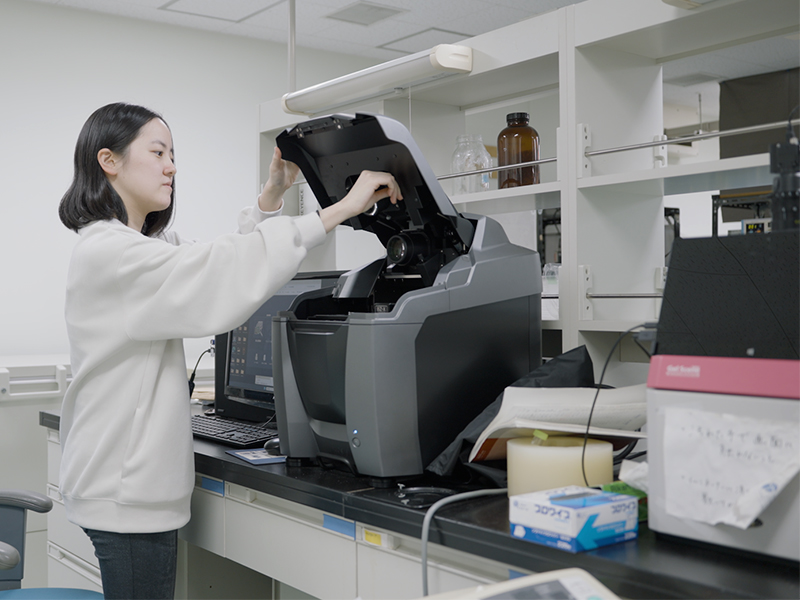
What do you find most enjoyable or challenging about your research?
I am primarily engaged in behavioral studies using mice. I measure neural activity in real time when drugs are ingested or stress is applied, or I artificially activate neural activity to evaluate mouse behavior. In our experiments, we sometimes lose motivation when we do not get the results we want. Still, regardless of whether the results are good or bad, it is a fun moment for me to confirm the results of my experimental manipulations or newly conceived experimental designs.
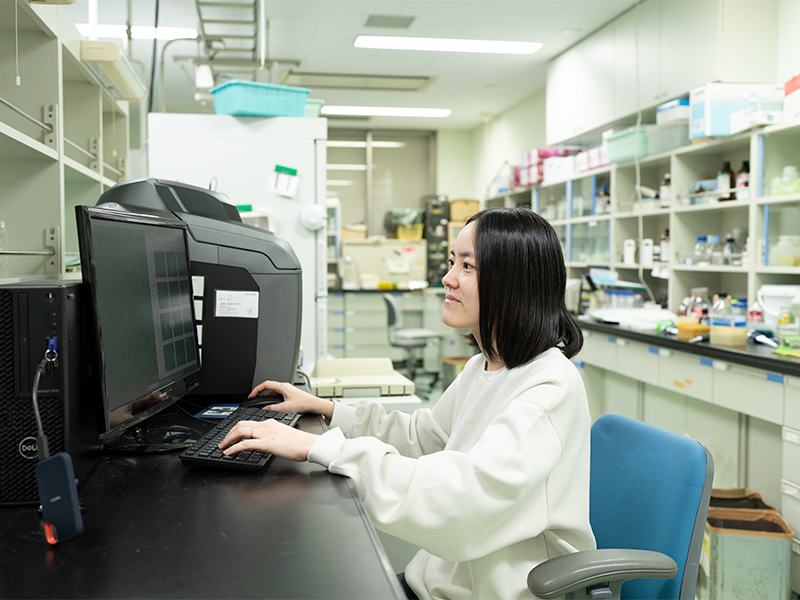
Unlike extracurricular activities in high school, research in graduate school gives me more opportunities to think about my own experimental plans and directions on how to proceed, and I have far more opportunities to read papers. While I enjoy the stimulating environment in which I am required to acquire new techniques and knowledge, research activities have become a part of my life and feel more like a job.
Some of the projects in our laboratory are long-term. While there is a time limit during the bachelor's program, the ability to be more deeply involved in the laboratory with an eye toward the doctoral program is a major attraction. I believe that by deciding on a career path early, you will have a wider range of options to challenge yourself.
I heard that you got married while you were in the doctoral program.
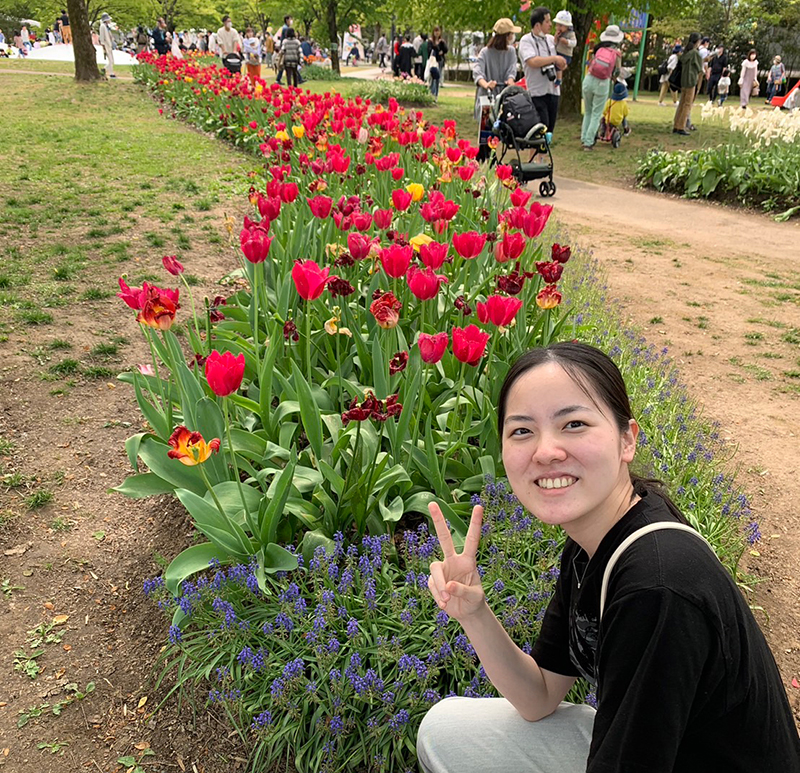
I met my husband at a welcome party for new students at School of Pharmacy, then we became close friends through our club, and we just got married a few months ago. I was a little unsure and anxious about whether I would be able to balance married life with my busy research schedule, but the fact that there were people around me who had experienced student marriages made me think positively that this was a possible path for me to take.
Finally, could you share your dreams for the future?
I would like to work for a pharmaceutical company after completing my degree. In recent years, many pharmaceutical companies have been focusing on research and development for intractable neurological diseases and dementia. I hope that the skills and knowledge I have acquired through my doctoral research on the central nervous system will help in drug discovery research.
*Note: All affiliations, academic years, and other information are accurate as of the time of the interview.
(Tamayo Kido, writer)
 PAGE TOP