




*****The following content was written by the author(s) of the paper.*****
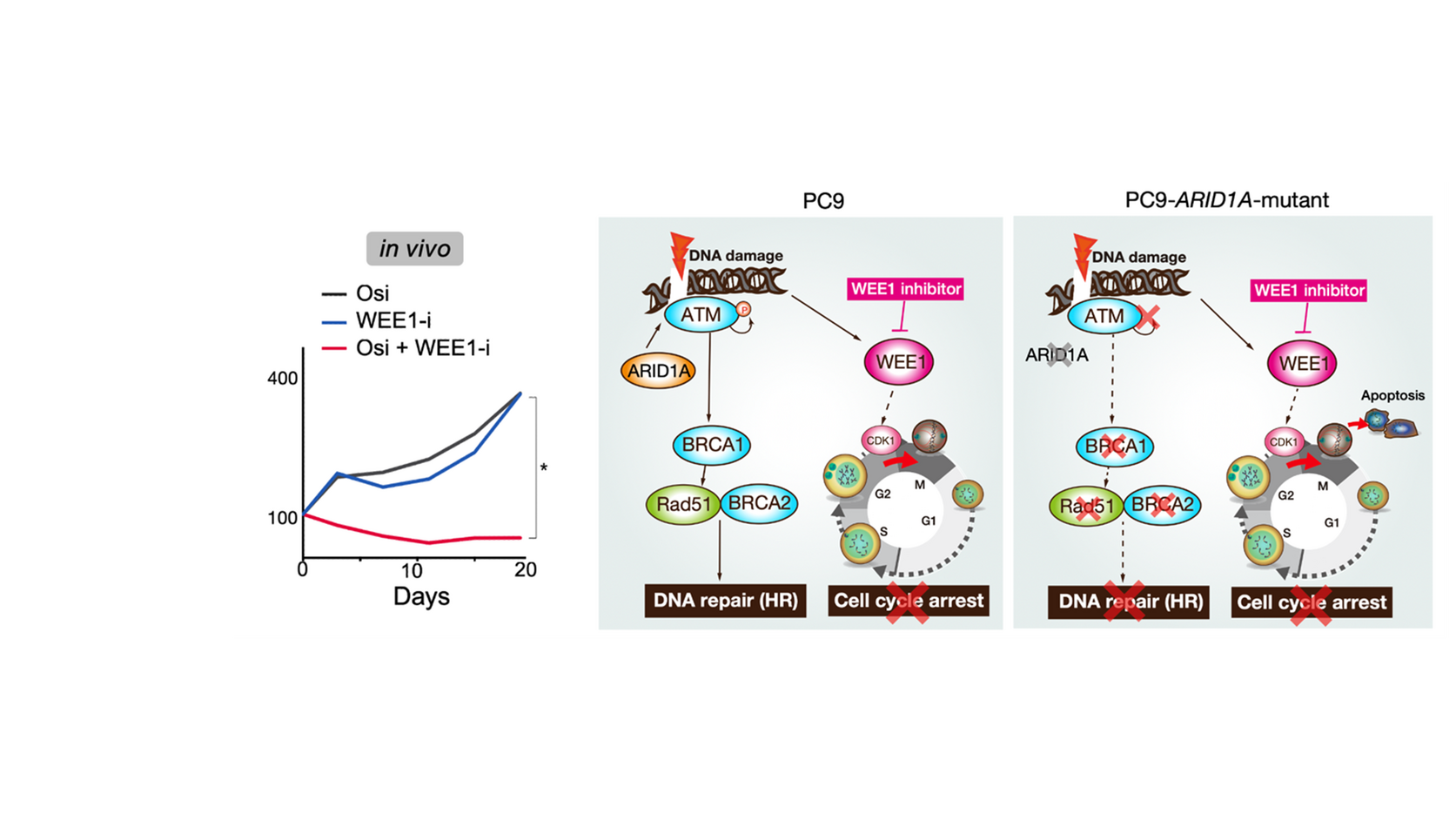
A research team led by Assistant Professor Koji Fukuda from the Cancer Research Institute and Nano Life Science Institute at Kanazawa University, along with Lecturer Shigeki Nanjo from the Department of Respiratory Medicine, Kanazawa University Hospital, Lecturer Shinji Takeuchi from Kanazawa University Hospital, and Professor Seiji Yano from the Department of Respiratory Medicine, Kanazawa University Hospital, in collaboration with the University of California, San Francisco (UCSF), has identified ARID1A (*2) gene mutations as a mechanism underlying resistance to the molecular targeted drug osimertinib in EGFR (*1) -mutated lung cancer. Additionally, they demonstrated that WEE1 (*3) -targeted therapy effectively overcomes this resistance in preclinical.
Lung cancer is the leading cause of cancer-related death in Japan, resulting in approximately 80,000 deaths per year. EGFR mutations are detected in 30–40% of Japanese patients with non-small cell lung cancer, and osimertinib (*4), a treatment targeting these mutations, initially exhibits high effectiveness. However, resistance frequently develops within a few months to one year, leading to cancer progression. Particularly, cases involving brain or leptomeningeal metastases are challenging to treat, necessitating effective countermeasures.
In this study, a detailed analysis of osimertinib-resistant cancer cells revealed that mutations in the ARID1A gene are responsible for this resistance. Furthermore, clinical data analysis showed that patients with ARID1A mutations had reduced treatment efficacy and a poorer prognosis. In addition, the team discovered that WEE1 inhibitors restored therapeutic effectiveness in osimertinib-resistant cells.
These findings are expected to contribute to improved treatment efficacy and survival rates for EGFR-mutant lung cancer patients facing drug resistance in the future.
The results of this research were published online in the international journal "Journal of Thoracic Oncology" on June 13, 2025 (Eastern Daylight Time).
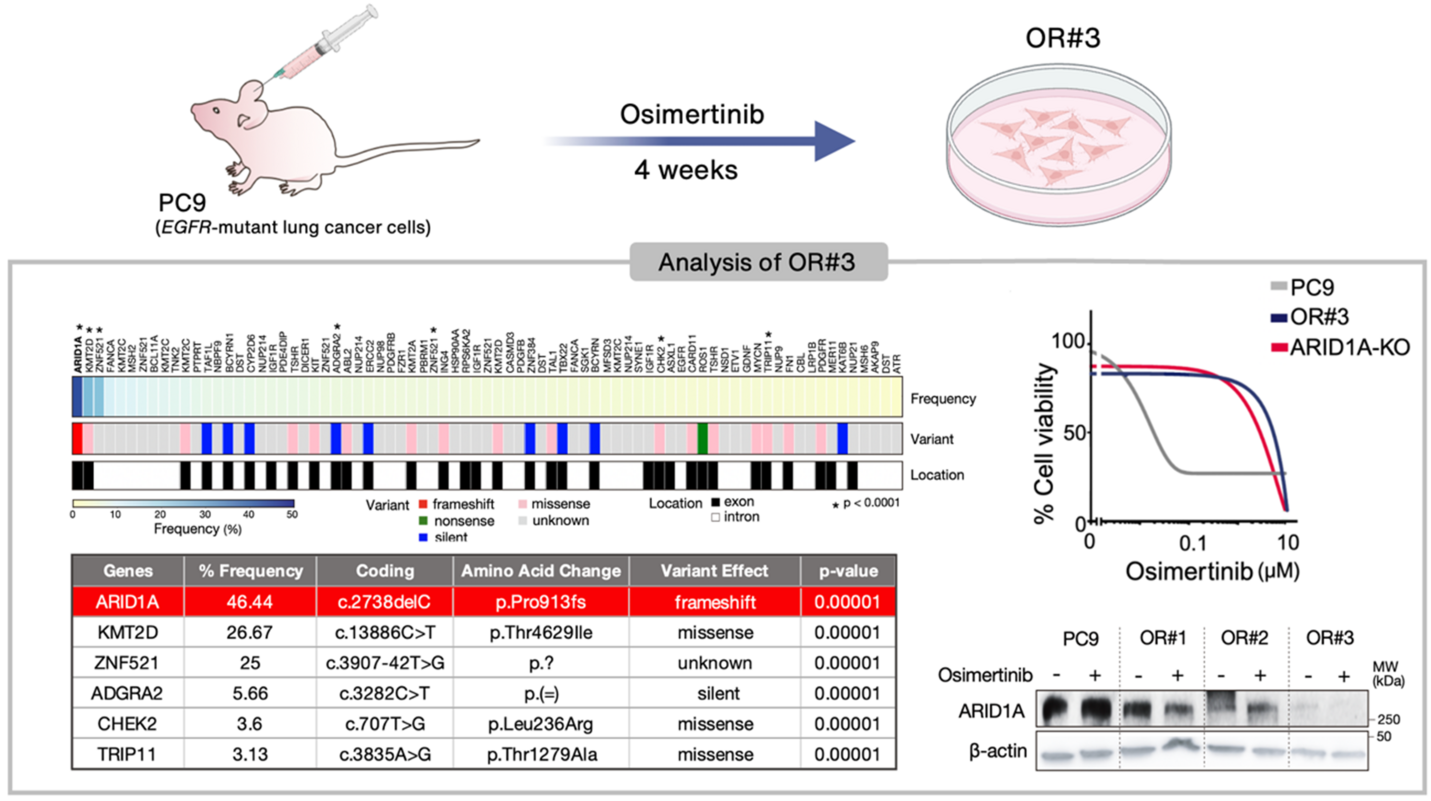
Figure 1: EGFR-mutant lung cancer cells (PC9) were transplanted into the leptomeningeal cavity of mice, and osimertinib-resistant cells (OR#3) were collected after treatment. Next-generation sequencing revealed that the ARID1A gene mutation was detected at the highest frequency. Additionally, knocking out the ARID1A (ARID1A-KO) in parental PC9 cells induced resistance to osimertinib, suggesting reduced ARID1A expression drives the resistance.
Adapted from Fukuda K, et al. J Thorac Oncol. 2025;20:1459–1474, used under the Creative Commons Attribution 4.0 International (CC BY 4.0) license.
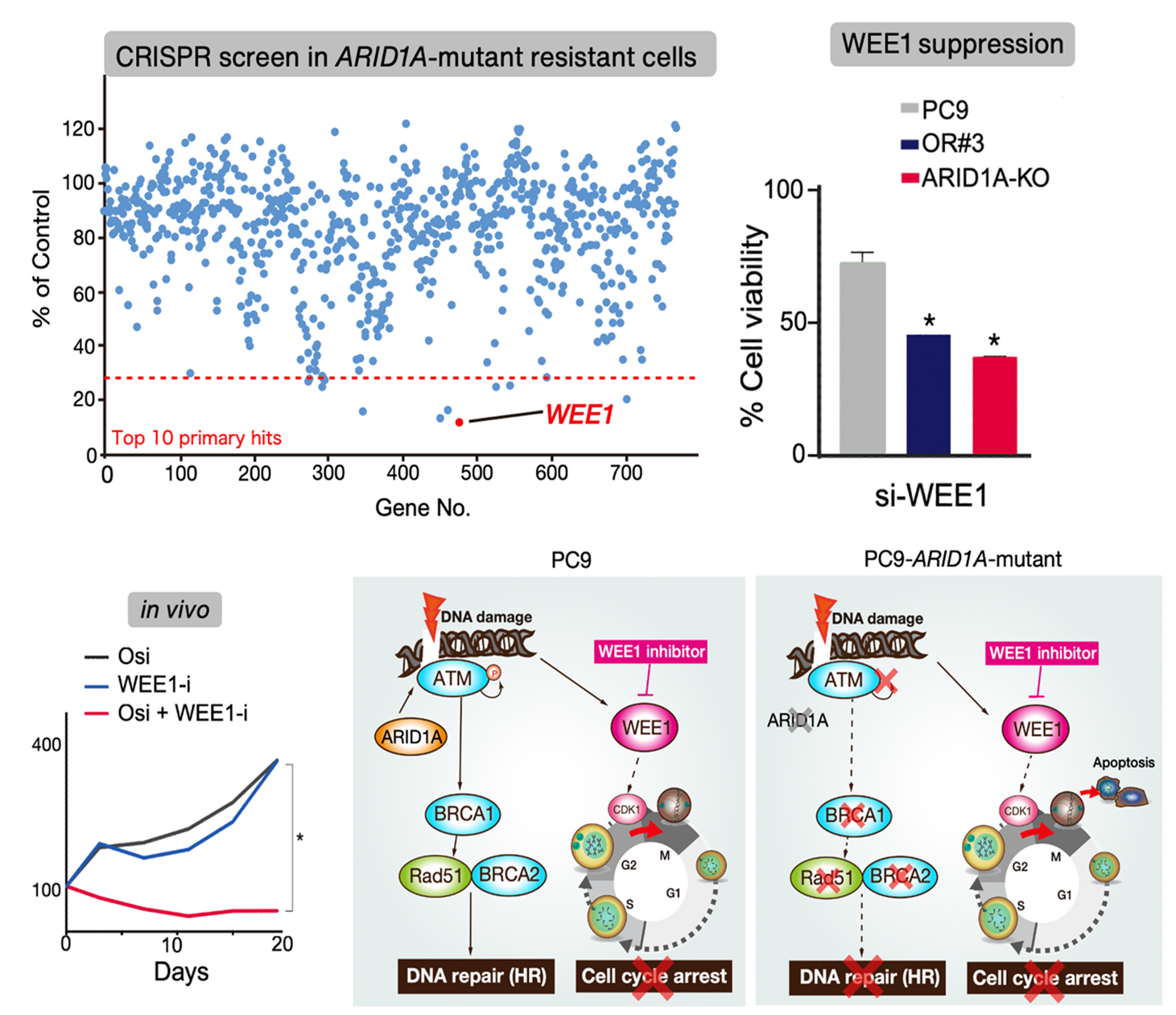
Figure 2: A CRISPR knockout screen of 746 genes in resistant cells revealed that knockout of the WEE1 gene most significantly inhibited cancer cell survival. WEE1 inhibition was more effective against resistant cells harboring ARID1A mutations than against parental cells. In vivo mouse models demonstrated that combination therapy with WEE1 inhibitors and osimertinib effectively suppressed tumor growth. The ARID1A-mutated cells are thought to have impaired DNA repair function, rendering them particularly vulnerable to WEE1 inhibition, thus strongly promoting cell death.
Adapted from Fukuda K, et al. J Thorac Oncol. 2025;20:1459–1474, used under the Creative Commons Attribution 4.0 International (CC BY 4.0) license.
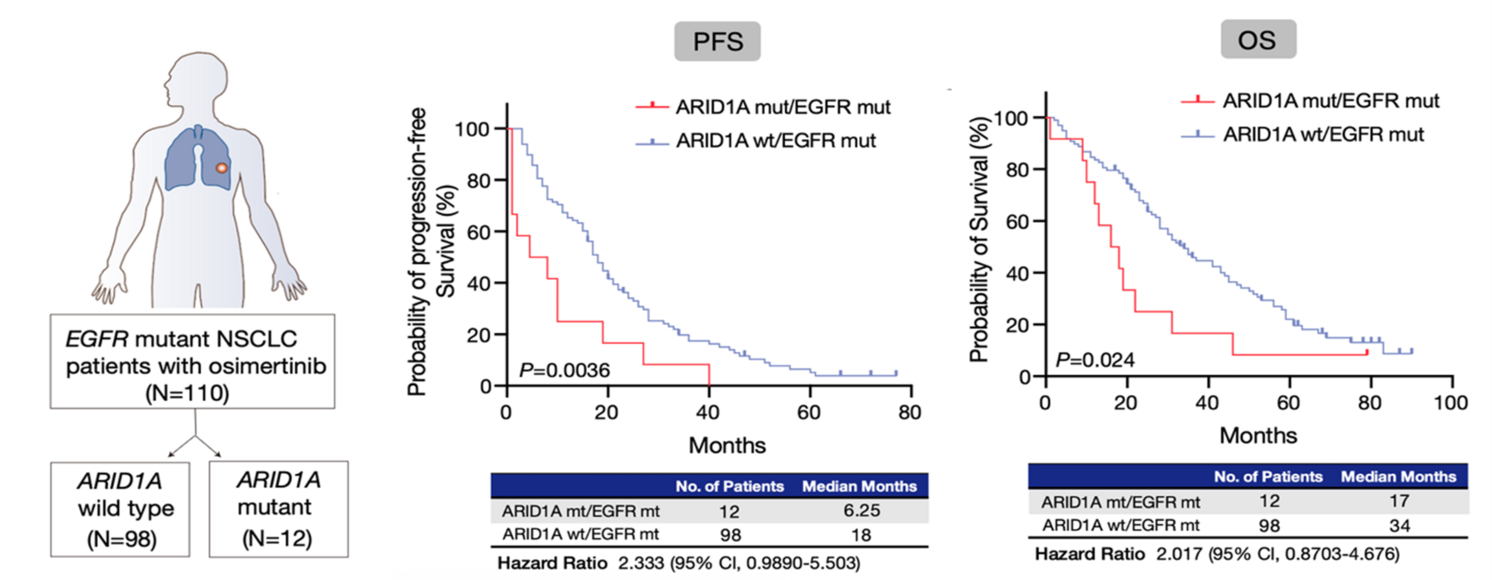
Figure 3: Analysis of clinical data from 110 EGFR-mutant lung cancer patients identified ARID1A mutations in 12 cases. Patients with ARID1A mutations exhibited significantly shorter progression-free survival (PFS) and overall survival (OS) after osimertinib treatment, indicating poor prognosis.
Adapted from Fukuda K, et al. J Thorac Oncol. 2025;20:1459–1474, used under the Creative Commons Attribution 4.0 International (CC BY 4.0) license.
*1 EGFR
Epidermal Growth Factor Receptor. A cell‑surface receptor that regulates cell proliferation and differentiation. In lung cancer, mutations in the EGFR gene can cause abnormal cell growth leading to cancer.
*2 ARID1A
A protein that regulates chromatin structure and controls gene expression within cells. It is known to play a role in suppressing cancer, and mutations in this gene can lead to the progression of cancer.
*3 WEE1
A protein that regulates the cell cycle. It acts as a “brake” during cell division, allowing time for DNA to be repaired when it is damaged. If WEE1 does not function properly, damaged DNA may not be repaired, and cell division may continue, ultimately leading to cell death.
*4 Osimertinib
A molecular‑targeted therapy effective against lung cancers with EGFR mutations. Although highly effective initially, long‑term use often leads to the development of drug resistance.
Click here to see the press release.【Japanese only】
Journal : Journal of Thoracic Oncology
Researcher Information : Koji Fukuda
Shigeki Nanjo
Shinji Takeuchi
Seiji Yano
Related Information
Cancer Research Institute, Kanazawa University
Nano Life Science Institute, Kanazawa University
 PAGE TOP