




What Should High Schools Teach, and What Should High School Students Learn?
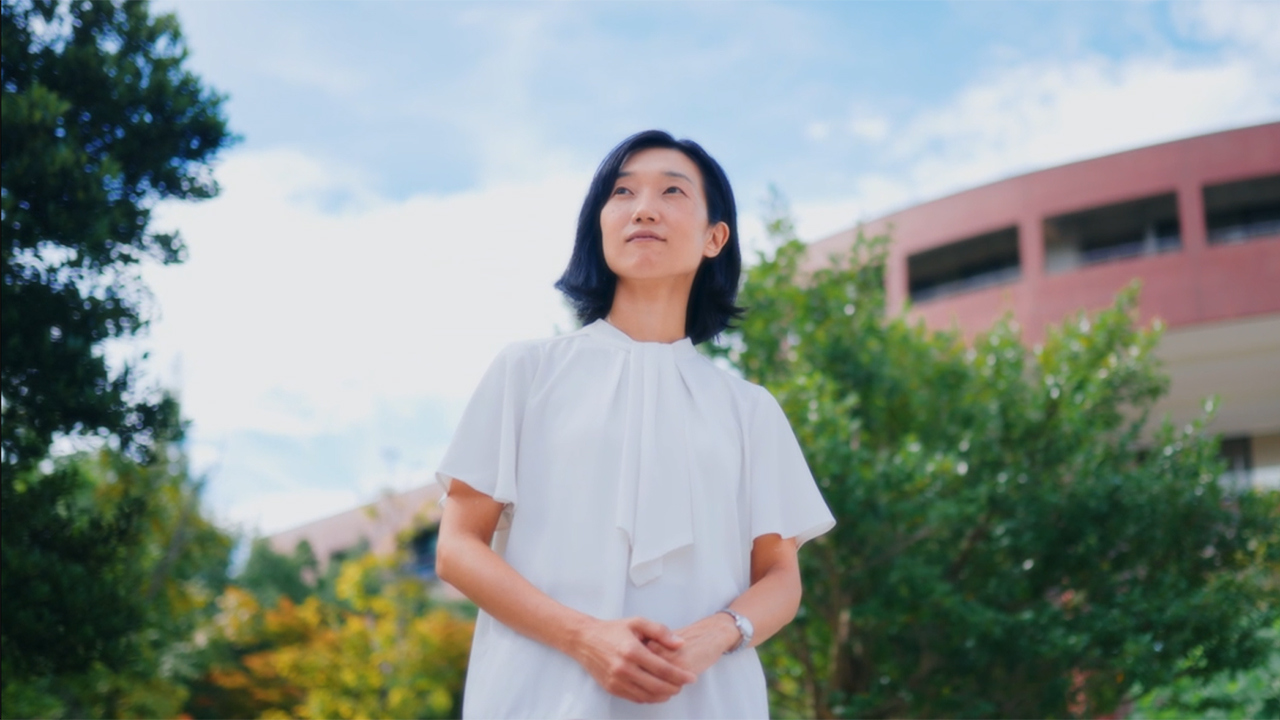
A simple question that arose when Associate Professor Megumi Honjo was preparing to enter high school, namely, “How will what I learn in high school connect to my future, and what possibilities will it open up for me?”, eventually led her to a career in educational methodology research. At university, Honjo majored in education. There, she was struck by the differences between Japanese and overseas high school education systems and developed a strong interest in comparing them. In particular, she became interested in the Swedish high school education system. In Sweden, nearly all young people continue to high school, where a wide range of specialized educational programs is available. Students are encouraged to choose their educational pathways at the time of admission based not only on academic performance but also on their future career goals and aspirations. At the same time, systems are in place to ensure that choices made at the beginning of high school do not permanently determine a person’s future. Opportunities for lifelong learning and for returning to education as an adult are widely available. Furthermore, Sweden provides extensive guidance and support to ensure that students’ future opportunities are not determined by factors such as socioeconomic background or their parents’ level of educational attainment. “By comparing Swedish education with Japanese education, we can view Japan’s high school system more objectively and reconsider its current state,” she explains. “The point is not that one system is superior to the other, nor that a particular approach should simply be adopted. Rather, the value lies in comparing educational systems across countries.” Associate Professor Honjo believes that such comparisons can bring greater diversity to high school education and contribute to creating better educational opportunities by encouraging reflection on both the personal and social significance of education.
Educational Methodology : Lessons from Comparing High School Education in Sweden
Educational methodology is an academic field that explores how education and educational practices can be improved. Associate Professor Honjo specializes in curriculum studies, a branch of educational methodology that examines how the content and objectives of school education are shaped, how they influence students’ future lives and society, and what constitutes effective educational practices. In her research on Swedish high school education, she investigates the historical background and development of Sweden’s educational system to uncover the theories and principles embedded within it. Through fieldwork and comparative research, she also examines the differences and similarities between educational practices in Sweden and Japan. Learning about diverse educational approaches has significantly influenced her own teaching philosophy. “It is important to have various ways of recognizing and appreciating students’ abilities,” she explains. According to her, by the time students complete junior high school, each student has already developed unique strengths and individual characteristics. She emphasizes that even if a student does not achieve high examination scores, that student still has many possible futures ahead. “Students can pursue a wide variety of paths in life. It would be wonderful if the school system itself could provide opportunities to expand those possibilities. Through comparative research and reflection on different educational systems, Associate Professor Honjo seeks to contribute to the development of educational environments that recognize students’ individuality and support a wider range of future opportunities.
Sharing the Joy of Learning
Associate Professor Honjo’s aspiration is simple yet profound: to enjoy learning together with her students. Learning is filled with many kinds of joy: the excitement of discovery, intellectual curiosity, the pleasure of grasping fundamental ideas, the delight of seeing the world from a new perspective, and the satisfaction of realizing one’s own growth and transformation. Genuine learning, in her view, encompasses all these elements. She believes that teachers should share this joy of learning with their students. Creating an environment where this can happen is what she sees as a true educational “space” or learning environment. “Enjoying learning is closely connected to enjoying life,” she explains. In her personal life as well, she values taking the next step beyond what she currently believes is possible. Learning itself is a process of continually asking where that next step may lead and what future it may open up. Education is never something that can be considered complete. There is no point at which one can say, “Now it is finished.” Instead, education is an ongoing process of experimentation, reflection, and improvement that evolves across generations and through changing times. Within this process, schools should be more than places that simply transmit knowledge. Associate Professor Honjo hopes that schools will continue to serve as starting points where students and teachers can enjoy learning together and take the next step toward new possibilities.
(Science writer: Yuko MITERA, English translation:Md Abul Kalam SIDDIKE)
 PAGE TOP