


On September 16, the Institute of Nature and Environmental Technology at Kanazawa University held an open house to mark the resumption of use of its Coastal Research Facility (Ogi, Noto Town, Ishikawa Prefecture), which was damaged in the 2024 Noto Peninsula Earthquake. Participants included Trustee Yasushi Takinami (in charge of General Affairs, Finance, and Facilities) / Vice President of Kanazawa University, as well as Professor Nobuo Suzuki, Director of the institute and Head of the facility; Associate Professor Toshio Sekiguchi of the institute; and Technical Specialist Shozo Ogiso of the Environment and Safety Division, Engineering and Technology Department.
The facility suffered extensive damage from the 2024 Noto Peninsula Earthquake, including large-scale collapses of the seawall and cliffs. Restoration work on the cliffs was subsequently carried out, and the facility had been provisionally reopened for operations since June 2025. Following the completion of the seawall restoration work at the end of August 2026, it has become possible to resume practical training aboard the research training vessel, as well as educational and research activities using the laboratories and lecture rooms. From the end of September through the end of the academic year, renovation work on the accommodation building will be carried out to strengthen the facility’s functions as a disaster prevention and reconstruction hub, and full resumption of use of the facility is scheduled for April next year.
With the resumption of use of this facility, practical education and joint research on marine environments and ecosystems, which had been restricted for approximately two years and eight months since the disaster, will resume. Furthermore, the facility is expected to further expand its diverse educational and research activities, including joint-use education with universities in Japan and overseas, international summer schools, and support for inquiry-based learning in collaboration with elementary, junior high, and senior high schools. Going forward, the university will further promote environmental research and human resource development in the Sea of Japan region and contribute to solving environmental challenges facing local communities and the world through the creation of “Future-oriented Intelligence,” a concept advocated by Kanazawa University.
Institute of Nature and Environmental Technology, Kanazawa University
The institute has been designated by the Ministry of Education, Culture, Sports, Science and Technology (MEXT) as a Joint Usage / Research Center, the “International Joint Research Center for Environmental Changes Associated with Transboundary Pollution.”
Coastal Research Facility of the Institute
The facility has received continued designation for the fourth term (FY2027–FY2032) as an Educational Joint Usage Center, the “Joint Usage Center for Disaster Prevention Education on Advanced Sustainable Environmental and Conservation Sciences Focusing on the Sea of Japan Region.” As the only coastal and lake research facility in Japan designated as a joint-use center for both education and research, it serves as a hub for a diverse range of educational and research activities, including collaboration with universities and research institutions in Japan and overseas, collaboration with elementary, junior high, and senior high schools, and international summer schools.
-
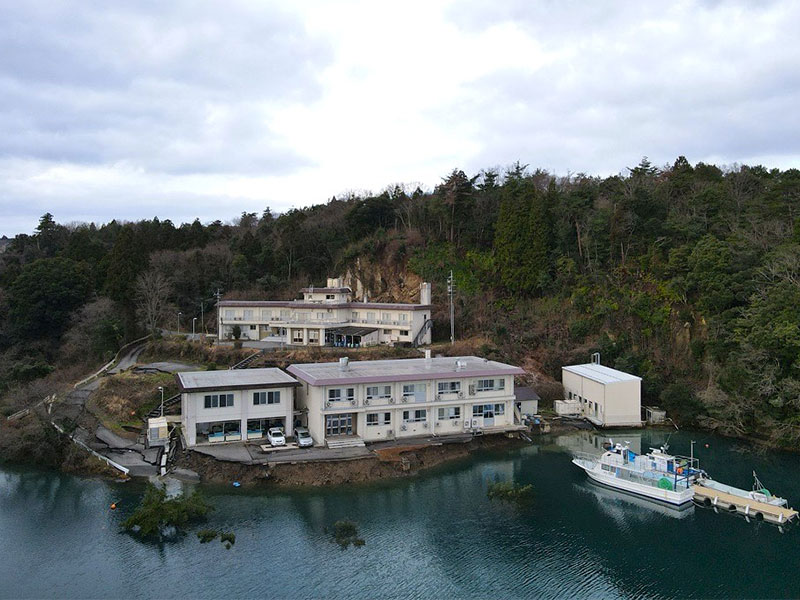 Coastal Research Facility damaged in the 2024 Noto Peninsula Earthquake (at the time)
 -
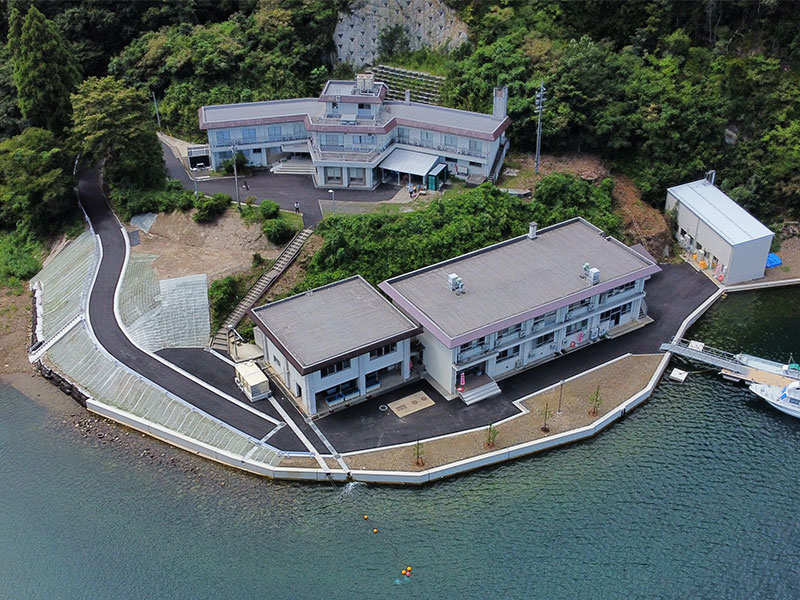 Exterior view of the Coastal Research Facility after completion of restoration work
 -
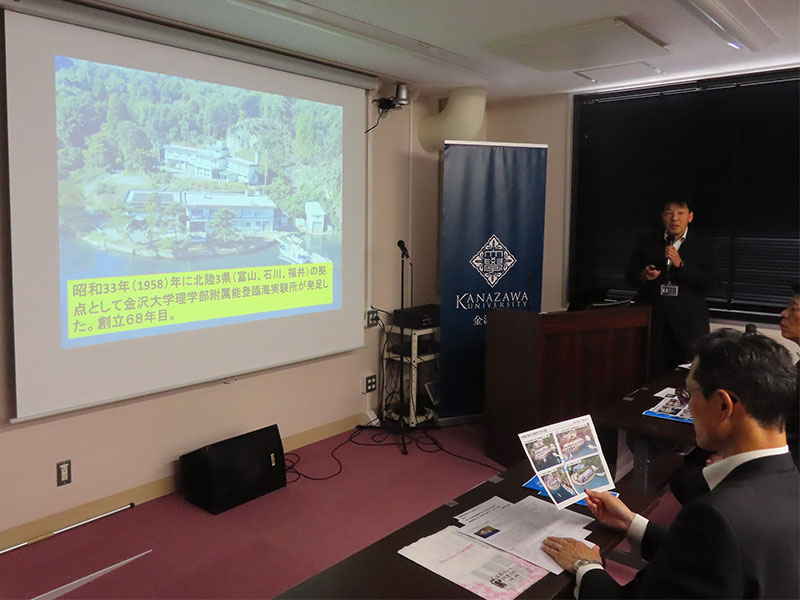 Professor Suzuki explaining the outline of the facility at the open house
 -
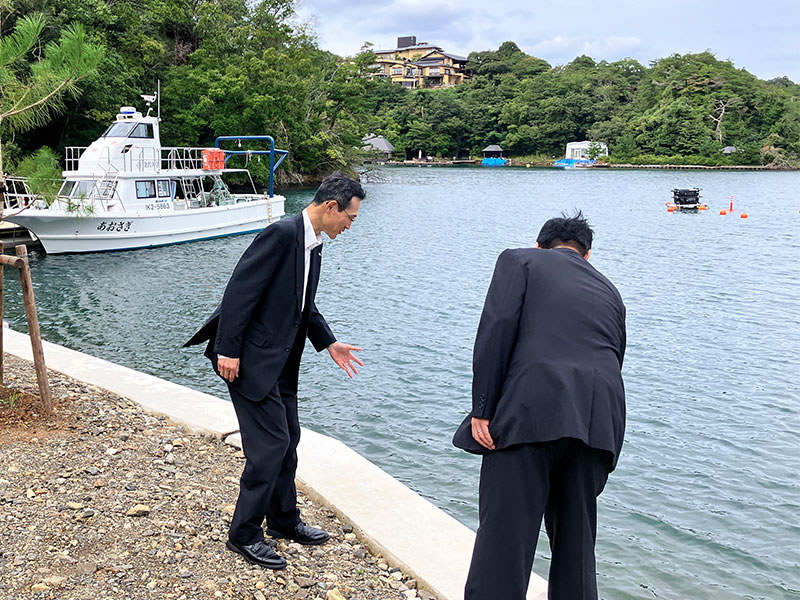 Trustee Takinami (left) and Professor Suzuki inspecting the restored seawall
 PAGE TOP