
A collaborative research group including Professor Kunishige Kataoka and Associate Professor Satoshi Yamashita of the Faculty of Chemistry, Institute of Science and Engineering, Kanazawa University, master's student Toshitada Takei and master's student (at the time) Takumi Nishiyama of the Graduate School of Natural Science and Technology, Kanazawa University, and program-specific researcher Taiki Adachi, Assistant Professor Keisei Sowa, and Professor Kenji Kano of the Graduate School of Agriculture, Kyoto University, analyzed the direct electron transfer enzyme electrode reaction (DET reaction) (*1) in copper efflux oxidase (CueO) derived from Escherichia coli and elucidated the activity regulation mechanism caused by the binding of copper ions.
CueO plays an important role in oxidizing highly toxic monovalent copper ions (Cu⁺) to divalent copper ions (Cu²⁺) in order to maintain intracellular copper homeostasis. This enzyme also has the unique feature of being able to receive electrons from an electrode and reduce oxygen to water, making it a DET-type reaction capable enzyme (DET-type enzyme). In our previous study, we had found that CueO DET-type reaction undergoes reductive inactivation (*3) in the presence of Cu²⁺, but the molecular mechanism was not clear.
In this study, based on the structural information of CueO, we hypothesized that the eighth copper (Cu8) binding site is the key to inactivation. Therefore, we produced mutants in which the copper-binding ability was lost by substituting amino acid residues presumed to be involved in Cu8 binding, and characterized them electrochemically.
The research group of the Kanazawa University, was responsible for formulating the hypothesis that Cu8 is involved in inactivation and creating mutants to be used for testing. The mutants in which histidine residues were substituted showed significant inactivation inhibition of Cu8. Kinetic analysis (*4) revealed that both the Cu8 binding ability and the standard redox potential were changed by the mutation. Furthermore, inactivation by Cu8 was also observed in enzymatic reactions in solution, suggesting that Cu8 may function as a mechanism to regulate the Cu²⁺/Cu⁺ ratio in vivo.
The results of this research are expected to have a ripple effect on the fields of biochemistry and electrochemistry, as they will deepen our understanding of the regulatory mechanism of copper metabolism and provide molecular design guidelines for the functionalization of DET-type enzymes.
The results of this research were published online in the international journal "Inorganic Chemistry" on December 11, 2025.

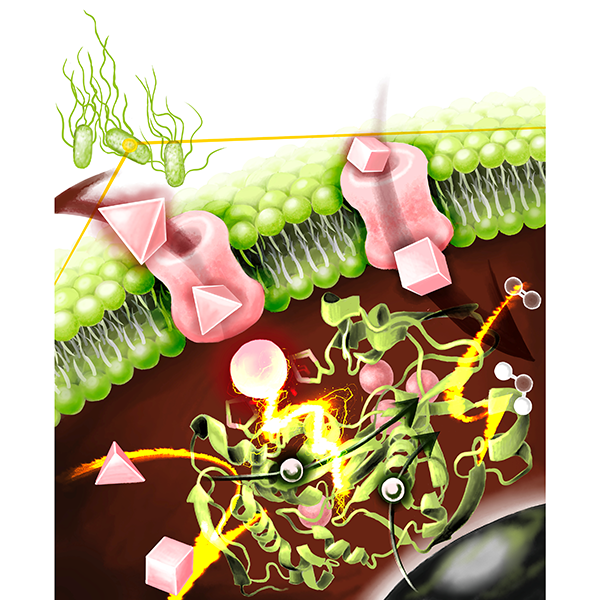
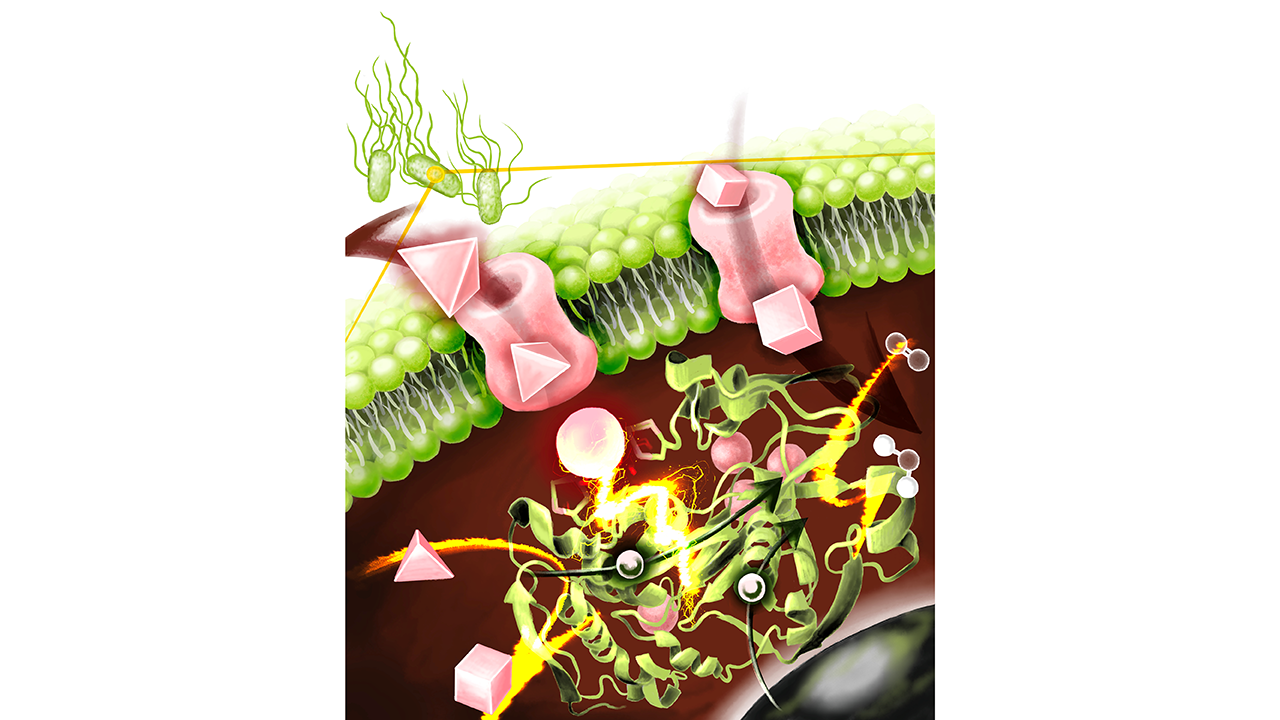
Image of intracellular copper metabolism regulated by CueO
【Glossary】
*1 Copper efflux oxidase (CueO)
An enzyme that catalyzes the oxidation of Cu⁺ to Cu²⁺ and the reduction of oxygen to water.
*2 Direct electron transfer enzyme electrode reaction (DET-type reaction)
A reaction in which an enzyme reaction and an electrode reaction are conjugated is called an enzyme-electrode reaction. Among these reactions, those in which the enzyme can directly transfer electrons to the electrode are called direct electron transfer reactions, and are referred to as DET-type reactions in the text.
*3 Reductive inactivation
A phenomenon in which enzyme activity decreases in a reducing environment, i.e., at low potential. The reverse, oxidative inactivation, has been confirmed for some enzymes.
*4 Kinetics analysis
Regression analysis of experimental data based on theoretical equations. Kinetic analysis allows quantitative estimation of various parameters related to the reaction.
Click here to see the press release【Japanese only】
Journal : Inorganic Chemistry
Researcher Information : Kunishige Kataoka
Satoshi
Yamashita
Related Information
Kanazawa University College of Science and Engineering School of Chemistry: https: //chemistry.w3.kanazawa-u.ac.jp/
Kanazawa University Graduate School Graduate School of Natural Science and Technology Division of Material Chemistry: https://www.nst.kanazawa-u.ac.jp/labp/chemistry/