




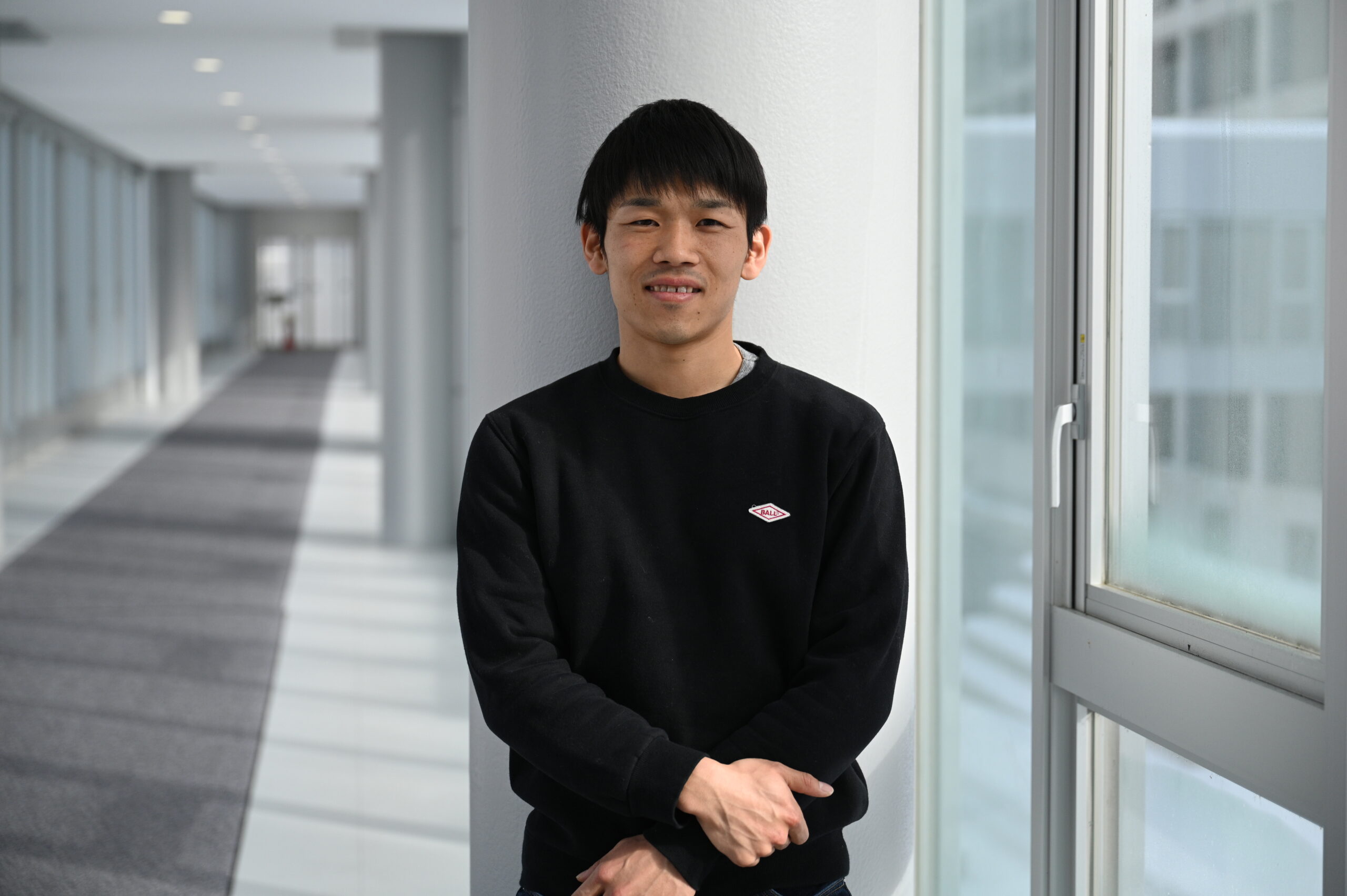
We interviewed Taisei Suzuki, a second-year doctoral student (at the time of the interview) in Division of Nano Life Science, Graduate School of Frontier Science Initiative. As a HaKaSe +selected doctoral student, he is actively earning the doctor’s degree. We interviewed him about the allure and value of the doctoral course and the worthiness of his study.
Firstly, what was the inspiration behind your decision to go on to the doctoral course?
The turning point came during a life science course I took while in the master’s course. At the time, I was majoring in astrophysics. Kanazawa University was running a small satellite development project, and I joined because I was eager to be part of it. Working on satellite development was incredibly rewarding and gave me valuable experience. However, the life science class I took sparked a renewed interest in biology—something I had been fascinated by since childhood. I was often sick as a child, and I constantly wondered what was happening inside my body. Even while working on space-related research, I never lost my curiosity about life phenomena or my desire to contribute to medical advancement. That course made me feel it was the right moment to change the direction of my life. I decided to pursue a doctoral degree and dive into the world of life sciences. Kanazawa University is home to the Nano Life Science Institute (WPI-NanoLSI),a world-class research center that integrates nanometrology, life science, supramolecular chemistry, and computational science. I changed my focus from astrophysics to biophysics, and I’m now conducting doctoral study at WPI-NanoLSI as a HaKaSe+selected doctoral student.
What kind of support does HaKaSe+ provide?
As someone who changed study fields before entering the doctoral course, the support I’ve received through HaKaSe+ has been a tremendous help in securing time to focus on my studies. Thanks to HaKaSe+ I’ve been able to immerse myself in study and even had the opportunity to present at international conferences. HaKaSe+ also offers a variety of initiatives aimed at helping doctoral students explore diverse career paths. These include insights into how Ph.D. holders are contributing not only in academia but also in industry, as well as real-life examples of job-hunting experiences shared by fellow doctoral students. These resources have given me valuable opportunities to reflect deeply on my own future and career direction.
Could you tell us about your study?
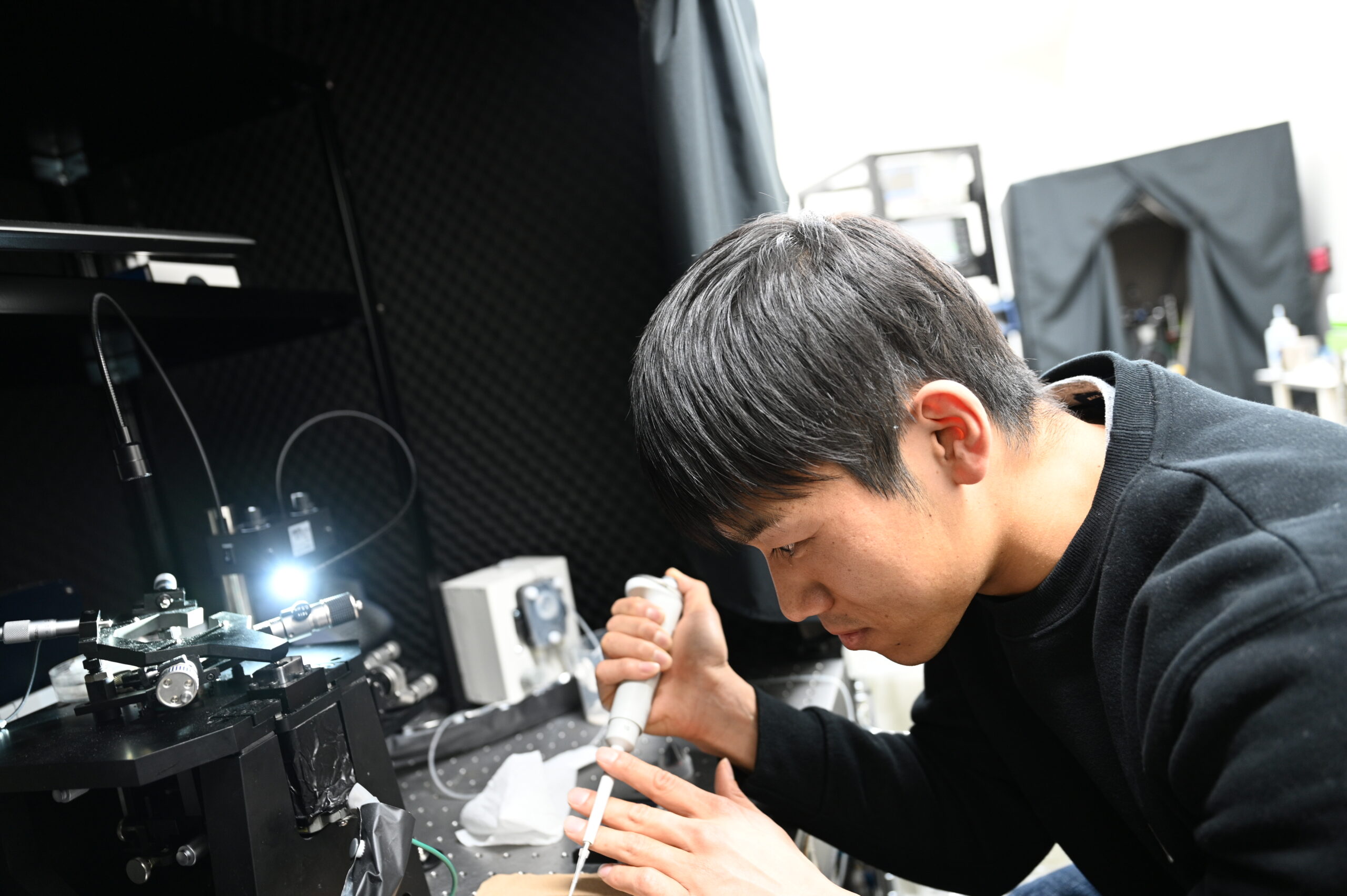
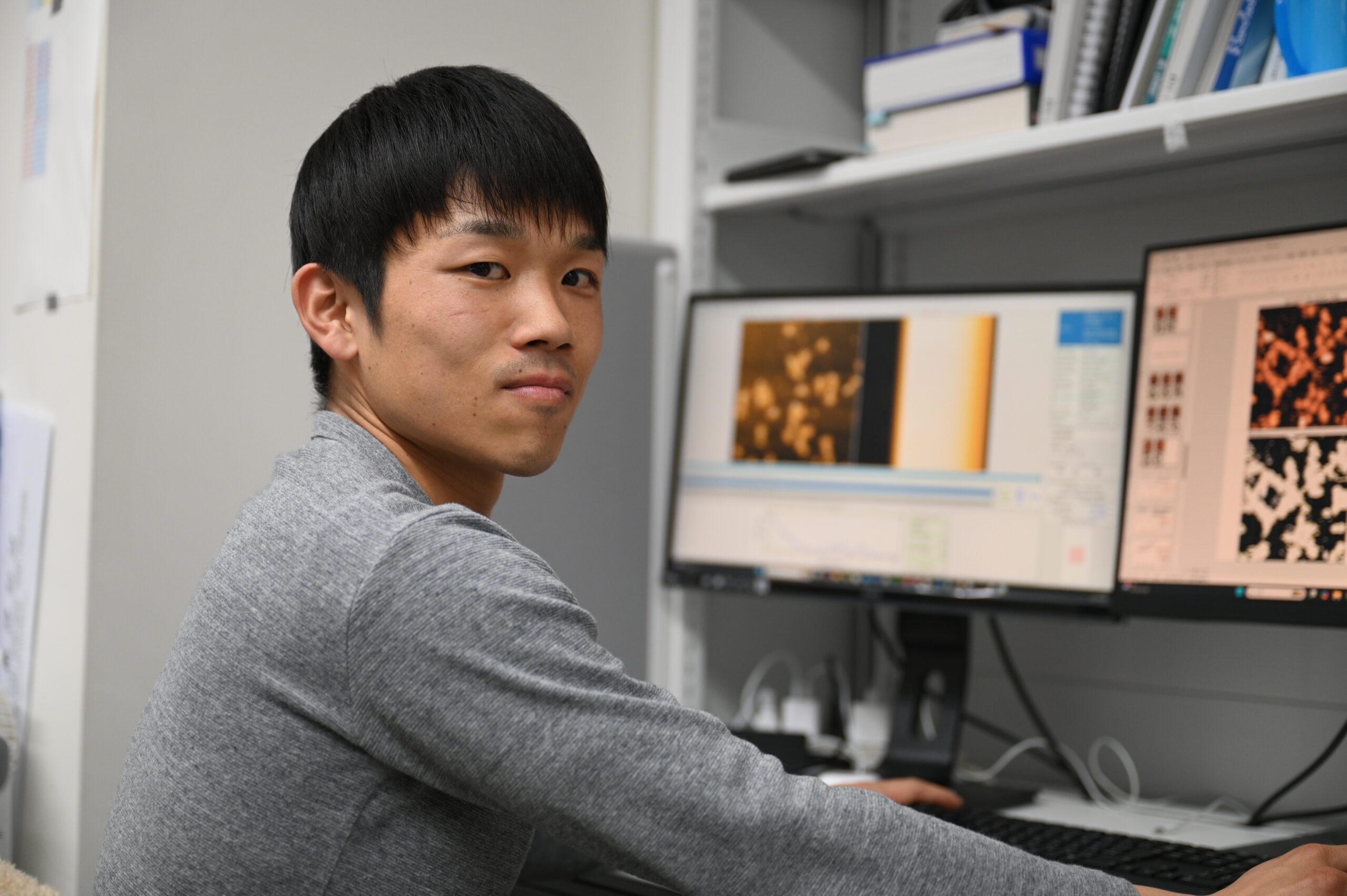
My current study focuses on observing and understanding the function of a protein called CaMKII (calcium/calmodulin-dependent protein kinase II),which plays a key role in memory formation in the brain. A crucial tool for this work is the high-speed atomic force microscope (high-speed AFM), a world-class technology developed at WPI-NanoLSI. This microscope allows us to visualize proteins in motion within a solution at nanometer resolution—one nanometer being one-billionth of a meter—capturing their behavior as video. By directly observing proteins involved in memory, my goal is to uncover how memories are formed at the molecular level within the brain.
What skills do you feel you’ve gained through your research activities so far?
One of the most important lessons I’ve learned is that growth often comes after facing challenges. For example, I once spent several weeks at an external research institute to learn protein purification techniques. It was my first time doing anything like that, and I struggled at first. But thanks to the patient guidance of my mentor there, I gradually improved and was able to bring those skills back to my own lab. I believe mastering this technique has helped me expand both the quality and scope of my study.
I’ve also learned the importance of taking initiative. The doctoral course lasts only three years, so time is limited. I’ve become more conscious of setting priorities, planning my research efficiently, and balancing work with proper rest and self-care. These skills have been essential for maintaining both productivity and well-being throughout my studies.
How do you take breaks from your study?
Baseball, which I kept playing until I graduated from university, is my favorite way to unwind. These days, I enjoy recreational baseball, running, and strength training. Staying physically active helps me relax and maintain my health at the same time. Whether in study or exercise, repetitive tasks can sometimes lead to mental rigidity. That’s why I make a conscious effort to vary my physical activities. I believe that flexible thinking is essential for good study, so I’d like to keep exploring new sports and ways to stay active.
Finally, could you share your dreams for the future?
The reason I chose the path of research stems from a deep desire to help people who are suffering from illness. That motivation has never changed, and I hope to continue pursuing work that allows me to make that vision a reality. The study I’m conducting in my doctoral course is just the beginning of that journey. Moving forward, I want to keep exploring how I can contribute to the advancement of medicine and help address the challenges society faces. I’ll continue seeking out the role I can play in creating a better future through science.
*Note: All affiliations, academic years, and titles mentioned are accurate as of the time of the interview.
(Yuko MITERA, Science Writer)
 PAGE TOP